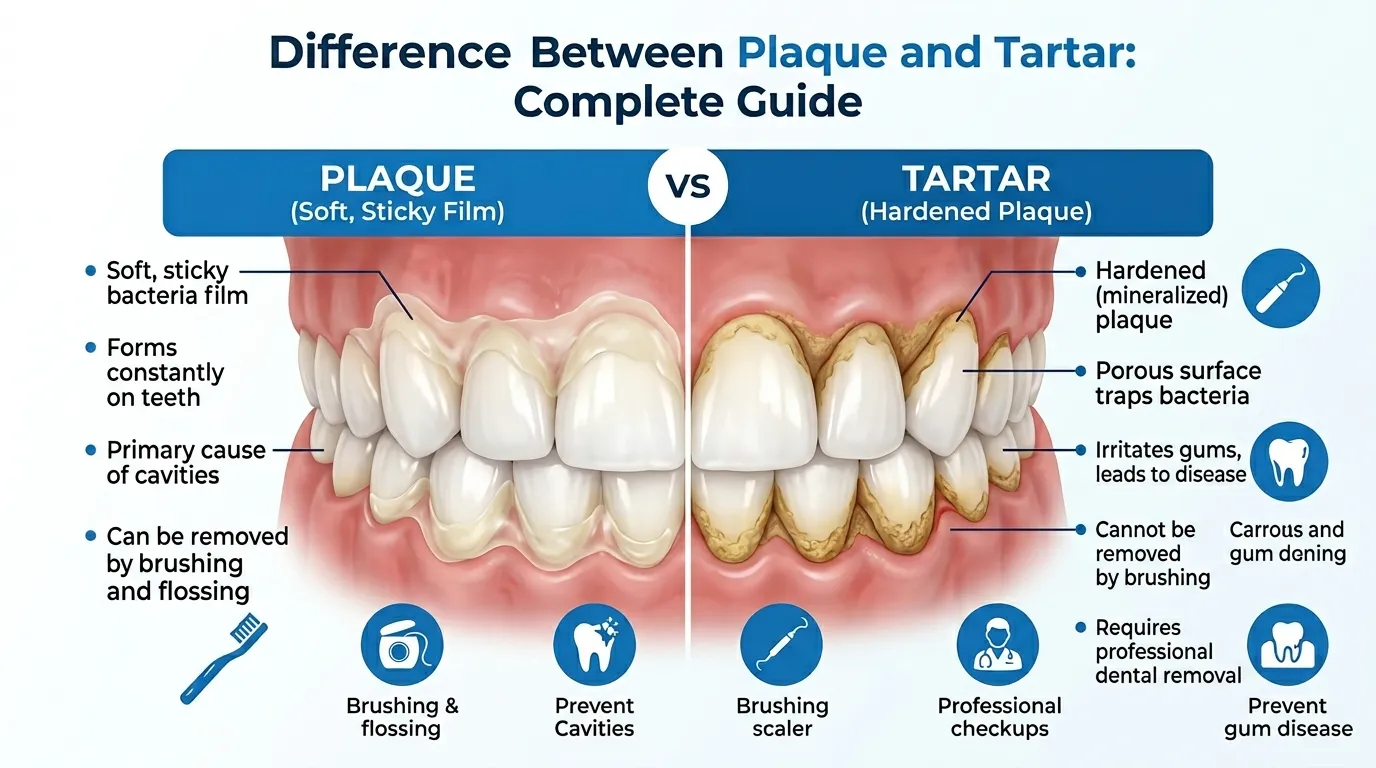
Plaque is a soft, sticky layer of bacteria on teeth, while tartar is hardened plaque that can only be removed by a dental professional.
Many people think plaque and tartar are the same thing because both form on teeth and can lead to dental problems. However, understanding the difference between plaque and tartar is essential for maintaining good oral health.
Plaque is a soft, sticky film of bacteria that develops on teeth every day, while tartar is hardened plaque that can no longer be removed by regular brushing.
The difference between plaque and tartar affects how they form, how they are treated, and the risks they pose to your teeth and gums.
If you’ve ever wondered what causes yellow buildup on teeth, why dentists emphasize cleanings, or how to prevent gum disease, this guide will explain everything clearly.
You’ll learn what plaque and tartar are, how they develop, their key differences, similarities, prevention methods, and expert dental insights.
Difference Between Plaque and Tartar
The main difference between plaque and tartar is that plaque is a soft bacterial film that can be removed by brushing and flossing, while tartar is hardened plaque that requires professional dental cleaning to remove.
Example: If you skip brushing for a day, plaque builds up on your teeth. If that plaque remains for several days and absorbs minerals from saliva, it hardens into tartar.
Definition of Plaque and Tartar
- Plaque: A soft, sticky layer of bacteria that constantly forms on teeth after eating and drinking.
- Tartar: Hardened plaque that has mineralized on the teeth and cannot be removed with normal brushing.
Simple Example: Fresh dust on furniture is like plaque; dust that hardens into a crust is similar to tartar.
Pronunciation
| Term | US Pronunciation | UK Pronunciation |
| Plaque | /plæk/ | /plɑːk/ |
| Tartar | /ˈtɑːr.tər/ | /ˈtɑː.tər/ |
Now that you know what these terms mean, let’s understand exactly how they differ and why that difference matters for your oral health.
Comparison: Difference Between Plaque and Tartar
| Feature | Plaque | Tartar |
| Formation | Forms daily from bacteria | Forms when plaque hardens |
| Texture | Soft and sticky | Hard and rough |
| Color | Usually colorless or pale yellow | Yellow, brown, or black |
| Removal | Brushing and flossing | Professional cleaning needed |
| Time to Develop | Within hours | Several days to weeks |
| Bacterial Activity | Active bacteria present | Bacteria trapped inside |
| Risk Level | Early stage problem | Advanced stage problem |
| Gum Impact | Causes irritation | Increases gum disease risk |
| Prevention | Daily oral hygiene | Prevent plaque buildup |
| Treatment Cost | Usually none | Dental scaling required |
Key Differences Explained Between Plaque and Tartar
1. Physical Appearance
Plaque is usually invisible or slightly white. Tartar appears yellow, brown, or even black.
Real-life example: You may not notice plaque after lunch, but tartar often appears as visible deposits near the gumline.
2. Texture
Plaque feels slippery and sticky, while tartar feels rough and hard.
Example: Running your tongue across tartar often reveals a gritty surface.
3. Removal Method
Plaque can be removed at home. Tartar typically requires dental instruments.
User insight: Many people mistakenly brush harder to remove tartar, but professional scaling is usually necessary.
4. Formation Process
Plaque forms naturally every day. Tartar develops only when plaque remains untreated.
5. Risk to Gums
Plaque can irritate gums, but tartar creates an ideal surface for more bacteria, increasing the risk of gingivitis.
6. Risk to Teeth
Long-term plaque may lead to cavities. Tartar increases cavity risk and accelerates gum disease progression.
7. Prevention Difficulty
Preventing plaque is relatively easy with daily oral care. Preventing tartar requires consistent plaque removal.
8. Professional Treatment Need
Dentists focus heavily on tartar removal because home care cannot eliminate hardened deposits.
How Does Plaque Form on Teeth?
Plaque develops when bacteria in the mouth combine with:
- Food particles
- Sugars
- Starches
- Saliva
These substances create a biofilm that sticks to tooth surfaces.
In simple words, every time you eat, oral bacteria feed on leftover carbohydrates and begin producing acids. These acids can weaken enamel and contribute to tooth decay.
Why Plaque Exists
The mouth naturally contains hundreds of bacterial species. Plaque is essentially a bacterial community living on tooth surfaces.
How Does Plaque Turn Into Tartar?
This is where many users get confused.
When plaque remains on teeth for an extended period, minerals such as calcium and phosphate from saliva begin hardening it.
The process:
- Plaque accumulates.
- Minerals deposit into plaque.
- Plaque hardens.
- Tartar forms.
Once mineralized, brushing alone usually cannot remove it.
Mini Summary
Plaque = Soft buildup
Tartar = Hardened buildup
Why Is Tartar More Harmful Than Plaque?
Tartar itself is not necessarily more aggressive than plaque, but it creates conditions that allow bacteria to thrive.
Problems associated with tartar include:
- Gum inflammation
- Gingivitis
- Periodontitis
- Persistent bad breath
- Tooth discoloration
- Increased cavity risk
Because tartar has a rough surface, new plaque attaches more easily, creating a continuous cycle.
Difference Between Plaque and Tartar in Gum Disease
Understanding this connection is crucial.
Plaque and Gingivitis
Plaque contains bacteria that irritate gum tissue.
Symptoms include:
- Red gums
- Swollen gums
- Bleeding during brushing
Tartar and Periodontal Disease
Tartar often forms near or below the gumline. This makes bacterial removal difficult and increases the risk of advanced gum disease.
In real scenarios, untreated tartar is one of the most common contributors to chronic periodontal problems.
Can You Prevent Plaque and Tartar Naturally?
Yes, especially plaque.
Best Prevention Methods
- Brush twice daily
- Floss every day
- Use fluoride toothpaste
- Reduce sugary snacks
- Drink more water
- Schedule regular dental cleanings
Foods That Help
- Apples
- Carrots
- Celery
- Cheese
- Leafy greens
These foods support saliva production and help reduce bacterial accumulation.
Difference Between Plaque and Tartar Cleaning Methods
| Cleaning Method | Plaque | Tartar |
| Brushing | Effective | Not effective |
| Flossing | Effective | Limited effect |
| Mouthwash | Helps reduce | Cannot remove |
| Water Flosser | Helps control | Cannot remove |
| Dental Scaling | Removes | Removes |
| Professional Cleaning | Helpful | Essential |
Difference and Similarity Between Plaque and Tartar
| Feature | Plaque | Tartar | Similarity |
| Meaning | Soft bacterial film | Hardened plaque | Both form on teeth |
| Cause | Bacteria and food debris | Mineralized plaque | Both originate from bacteria |
| Removal | Home care possible | Professional removal needed | Both require oral hygiene attention |
| Appearance | Usually transparent | Yellow or brown | Both may affect appearance |
| Dental Risk | Can cause cavities | Can worsen gum disease | Both harm oral health |
| Location | Tooth surfaces | Tooth surfaces and gumline | Both occur in the mouth |
| Prevention | Brushing and flossing | Prevent plaque first | Both are preventable |
| Oral Health Impact | Early-stage issue | Advanced-stage issue | Both affect teeth and gums |
This table clearly shows the difference and similarity between plaque and tartar for quick understanding.
Common Mistakes with Plaque and Tartar
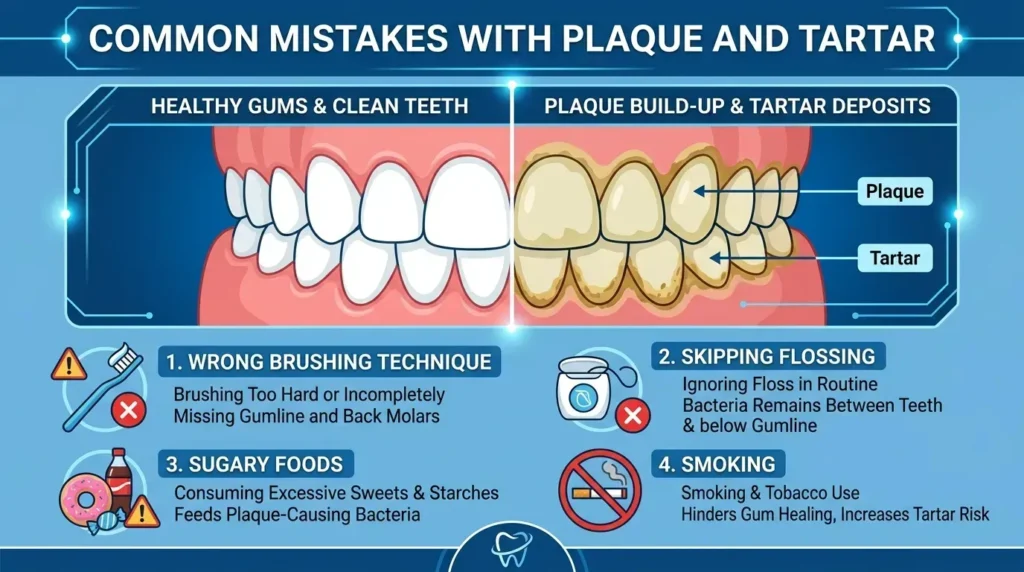
Mistake 1: Assuming They Are the Same
Correction: Plaque is soft; tartar is hardened plaque.
Mistake 2: Brushing Harder Removes Tartar
Correction: Excessive brushing can damage enamel and gums.
Mistake 3: Ignoring Minor Plaque Buildup
Correction: Small amounts can quickly develop into tartar.
Mistake 4: Skipping Flossing
Correction: Plaque often accumulates between teeth.
Mistake 5: Avoiding Dental Checkups
Correction: Professional cleanings remove tartar effectively.
Mistake 6: Believing Mouthwash Removes Tartar
Correction: Mouthwash helps control plaque but cannot dissolve tartar.
Real-Life Examples with Plaque and Tartar
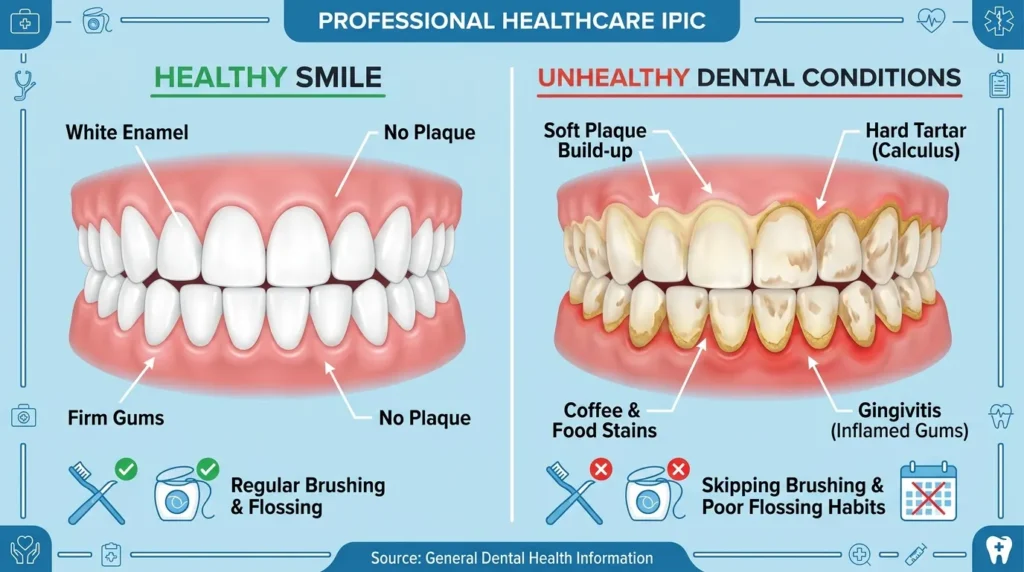
Personal Use
A student skips brushing before bed. Plaque accumulates overnight and causes morning bad breath.
Family Scenario
A parent consistently brushes and flosses. Plaque rarely develops into tartar.
Dental Clinic Example
A patient avoids cleanings for two years and develops heavy tartar near the gumline.
Business Professional Example
Coffee consumption and infrequent cleanings lead to visible tartar stains despite daily brushing.
Senior Care Example
Older adults with reduced dexterity may experience faster tartar accumulation due to incomplete plaque removal.
When to Use Each Understanding in Real Life
Focus on Plaque When:
- Improving daily oral hygiene
- Preventing cavities
- Teaching children brushing habits
- Monitoring early dental health
Focus on Tartar When:
- Seeing hard yellow deposits
- Experiencing gum bleeding
- Scheduling professional cleanings
- Addressing long-term oral health concerns
Why People Get Confused About Plaque and Tartar
Several factors contribute to confusion:
Similar Appearance
Both occur on teeth and involve bacterial buildup.
Marketing Language
Advertisements often use the terms together without explaining the distinction.
Delayed Formation
People don’t notice the transition from plaque to tartar.
Lack of Dental Education
Many individuals learn about cavities but not about plaque mineralization.
How Search Engines Understand “Difference Between Plaque and Tartar” and User Intent
Search engines such as Google analyze this query as a combination of:
- Informational intent
- Comparison intent
- Health education intent
Users typically want:
- Simple definitions
- Comparison tables
- Prevention advice
- Dental care recommendations
Modern search systems prioritize content that clearly answers:
- What is plaque?
- What is tartar?
- How do they differ?
- Which is more harmful?
- How can they be prevented?
This is why comprehensive comparison articles often perform better than short definitions.
Expert Insight
From a dental-health perspective, the most important fact is that tartar is usually a consequence of unmanaged plaque.
In practical use, dentists focus heavily on prevention because removing plaque daily is far easier and less expensive than treating tartar-related complications later.
Most beginners focus on visible tartar, but oral health professionals pay closer attention to the plaque that forms before tartar ever appears. Preventing plaque consistently is the foundation of healthy teeth and gums.
FAQs
Is plaque worse than tartar?
Not necessarily. Plaque starts the problem, while tartar makes it harder to stop.
Can tartar be brushed away?
No. Most tartar requires professional dental cleaning.
How long does plaque take to become tartar?
It can begin hardening within a few days if not removed.
What color is plaque?
Plaque is usually colorless, white, or pale yellow.
Does flossing remove tartar?
Flossing helps prevent tartar but generally cannot remove existing tartar.
Can tartar cause bad breath?
Yes. Tartar traps bacteria that can contribute to persistent bad breath.
Which causes cavities: plaque or tartar?
Plaque bacteria produce acids that directly contribute to cavities.
Is tartar permanent?
No. Dentists can remove tartar through scaling and professional cleaning.
Can mouthwash remove plaque?
Mouthwash helps reduce plaque formation but works best alongside brushing and flossing.
How often should teeth be professionally cleaned?
Most people benefit from professional cleanings every six months, though some may need more frequent visits.
Conclusion
Understanding the difference between plaque and tartar is essential for protecting your teeth and gums. Plaque is a soft, sticky film of bacteria that forms naturally every day, while tartar is hardened plaque that develops when plaque is left untreated. The biggest distinction is that plaque can be removed through regular brushing and flossing, whereas tartar typically requires professional dental cleaning.
In practical terms, plaque is the beginning of the problem and tartar is the result of ignoring that problem for too long. Both can contribute to cavities, gum inflammation, bad breath, and more serious dental conditions if left unmanaged. Fortunately, prevention is straightforward: brush twice daily, floss regularly, limit sugary foods, stay hydrated, and visit your dentist for routine cleanings.
If you remember one thing, let it be this: plaque is preventable every day, and preventing plaque is the best way to avoid tartar altogether. By understanding the difference between plaque and tartar and taking consistent action, you can maintain healthier teeth, stronger gums, and a brighter smile for years to come.
Meta Description
Difference Between Communism and Fascism: Explained Clearly
Difference Between Naproxen and Ibuprofen: Complete Guide

I am James Carter, a professional content writer from the United States. I specialize in writing simple and clear comparison blogs that help students and readers understand difficult topics easily. My writing focuses on everyday language, education, science, and lifestyle topics. I believe that learning should be easy for everyone, so I use simple words and real-life examples in my articles.