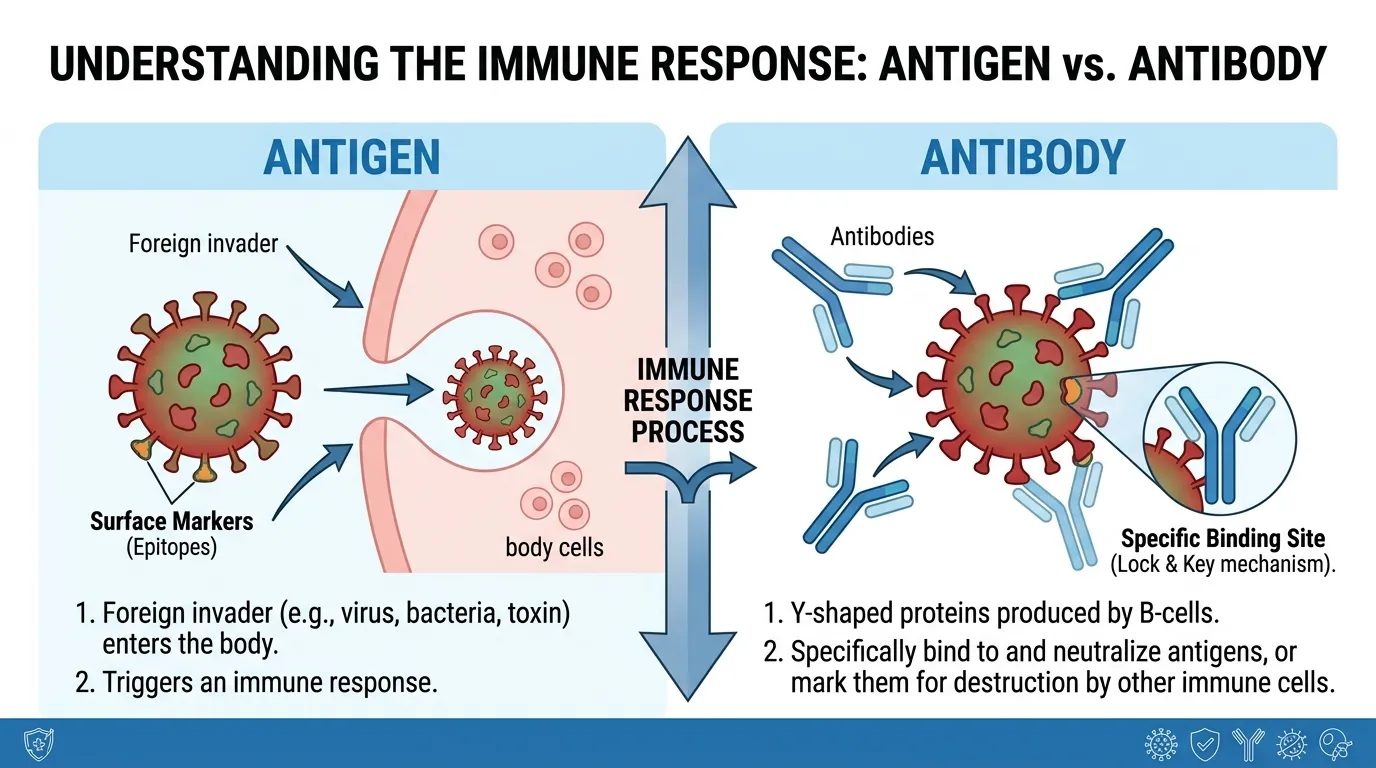
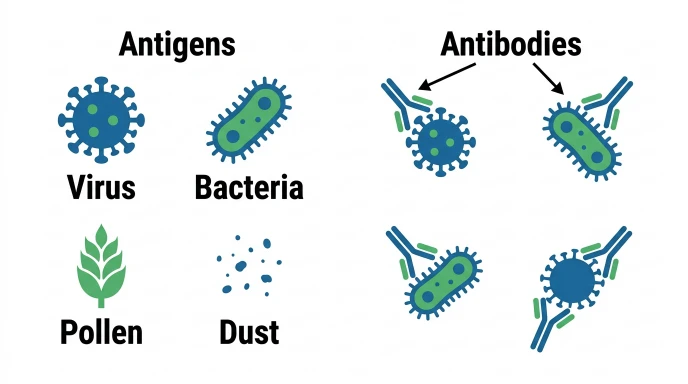
An antigen is a foreign substance that triggers an immune response, while an antibody is a protein produced by the immune system to recognize and neutralize that antigen.
Many people get confused when learning about the difference between antigen and antibody because both are important parts of the immune system and are often mentioned together in medical reports, vaccines, and infection testing.
The simple answer is that an antigen is a foreign substance that triggers an immune response, while an antibody is a protective protein made by the body to recognize and fight that antigen.
Understanding the difference between antigen and antibody helps explain how infections occur, how vaccines work, and why certain medical tests detect either antigens or antibodies.
In this guide, you’ll learn what antigens and antibodies are, how they interact, their key differences, similarities, real-world examples, and why they matter in modern healthcare and immunology.
Difference Between Antigen and Antibody
An antigen is a substance that the immune system identifies as foreign and potentially harmful. An antibody is a protein produced by the immune system to recognize, bind to, and help eliminate that antigen.
Example: During a flu infection, the flu virus contains antigens. Your immune system responds by producing antibodies specifically designed to recognize and fight those flu antigens.
Definition of Antigen and Antibody
- Antigen: A foreign molecule, such as a virus protein, bacterium, toxin, or pollen particle, that triggers an immune response.
- Antibody: A Y-shaped protein produced by B cells that specifically recognizes and binds to an antigen.
Simple Example: Think of an antigen as an intruder and an antibody as the security guard trained to identify that intruder.
Pronunciation
| Term | US Pronunciation | UK Pronunciation |
| Antigen | /ˈæn.tɪ.dʒən/ | /ˈæn.tɪ.dʒən/ |
| Antibody | /ˈæn.tɪˌbɑː.di/ | /ˈæn.tɪˌbɒd.i/ |
Now that we know the basic definitions, let’s understand how these two essential immune system components differ and work together.
Comparison: Difference Between Antigen and Antibody
| Feature | Antigen | Antibody |
| Definition | Foreign substance triggering immunity | Protective protein produced by immune cells |
| Origin | Comes from outside or abnormal cells | Produced by the body’s immune system |
| Function | Activates immune response | Defends against antigens |
| Composition | Proteins, sugars, toxins, or other molecules | Specialized proteins called immunoglobulins |
| Location | Viruses, bacteria, allergens, cancer cells | Blood, lymph, tissues, and secretions |
| Role in Infection | Causes immune recognition | Helps neutralize threats |
| Production | Naturally present on pathogens | Created after antigen exposure |
| Specificity | Each antigen has unique markers | Each antibody targets specific antigens |
| Medical Testing | Antigen tests detect current infection | Antibody tests detect immune response |
| Lifespan | Depends on source organism | Can persist for months or years |
Key Differences Explained Between Antigen and Antibody
1. Purpose in the Immune System
An antigen initiates immune activity.
An antibody responds to that activity.
Real-life example: A cold virus enters your body carrying antigens. Your immune system produces antibodies to fight it.
2. Source
Antigens usually come from:
- Viruses
- Bacteria
- Parasites
- Allergens
Antibodies are produced by B lymphocytes.
User insight: Many beginners mistakenly think antibodies come from outside the body. They are actually made inside the immune system.
3. Function
Antigens trigger recognition.
Antibodies provide defense.
Without antigens, antibodies would have no target.
4. Structure
Antigens can have many shapes and molecular structures.
Antibodies have a recognizable Y-shaped structure designed for precise targeting.
5. Role in Vaccines
Vaccines contain antigens or antigen-like components.
The body then produces antibodies against those antigens.
This creates immune memory.
6. Presence During Disease
Active infections often show detectable antigens.
Past infections often show detectable antibodies.
7. Medical Testing Use
Antigen tests identify current infections quickly.
Antibody tests help determine previous exposure or immune response.
8. Duration
Antigens disappear when pathogens are removed.
Antibodies may remain for long periods to provide future protection.
What Is an Antigen and Why Does It Exist?
An antigen is any substance that the immune system recognizes as foreign.
Common antigens include:
- Viral proteins
- Bacterial surface molecules
- Fungal particles
- Pollen
- Food allergens
- Cancer cell markers
Why Antigens Matter
The immune system needs a way to distinguish between “self” and “non-self.”
Antigens act as identification tags that help immune cells determine if something belongs in the body.
Mini Summary
Antigen = Target
Without antigens, the immune system would struggle to identify threats.
What Is an Antibody and How Does It Work?
An antibody is a specialized protein called an immunoglobulin.
Its primary job is to:
- Recognize antigens
- Bind to antigens
- Neutralize threats
- Signal immune cells for destruction
How Antibodies Work
Each antibody contains binding sites that match a specific antigen.
This relationship is often compared to a lock and key.
Once attached, antibodies help immune cells eliminate the threat.
Difference Between Antigen and Antibody in Vaccines
This is one of the most searched questions online.
Vaccines expose the immune system to harmless antigens or antigen fragments.
The body responds by producing antibodies.
When the real infection appears later, the immune system already knows how to respond.
Real-World Example
COVID-19 vaccines introduced antigen information that trained the immune system to produce protective antibodies before exposure to the virus.
How Does the Antigen-Antibody Reaction Work?
The antigen-antibody reaction is one of the most important mechanisms in immunology.
Steps include:
- Antigen enters the body.
- Immune cells recognize it.
- B cells activate.
- Antibodies are produced.
- Antibodies bind to antigens.
- Pathogens are neutralized or destroyed.
This interaction forms the foundation of immunity.
Difference Between Antigen and Antibody in Diagnostic Tests
Modern healthcare relies heavily on both.
Antigen Tests
Detect parts of pathogens.
Examples:
- Rapid flu tests
- COVID antigen tests
- Certain bacterial infection tests
Antibody Tests
Detect immune response.
Examples:
- Immunity screening
- Past infection detection
- Vaccine response evaluation
Which Is Better?
Neither is universally better.
They answer different questions:
- Antigen test → “Do I have it now?”
- Antibody test → “Have I had it before?”
Why Are Antigens and Antibodies Important in Disease Prevention?
The immune system’s ability to recognize antigens and produce antibodies protects humans from countless infections.
Benefits include:
- Faster immune response
- Reduced disease severity
- Long-term immunity
- Vaccine effectiveness
- Population-level disease control
Without this system, even minor infections could become life-threatening.
Difference and Similarity Between Antigen and Antibody
| Feature | Antigen | Antibody | Similarity |
| Meaning | Foreign trigger | Immune defender | Both participate in immunity |
| Source | External or abnormal cells | Produced by immune cells | Both influence immune response |
| Function | Activates defense system | Fights foreign substances | Both protect health |
| Location | Pathogens and allergens | Blood and tissues | Both interact inside the body |
| Medical Use | Diagnostic target | Diagnostic marker | Both used in laboratory testing |
| Disease Role | Starts immune reaction | Controls immune reaction | Both affect infection outcomes |
| Vaccine Relevance | Included in vaccines | Produced after vaccination | Both contribute to immunity |
| Specificity | Unique molecular marker | Specifically matches antigen | Both rely on molecular recognition |
This table clearly shows the difference and similarity between antigen and antibody for quick understanding.
Common Mistakes with Antigen and Antibody
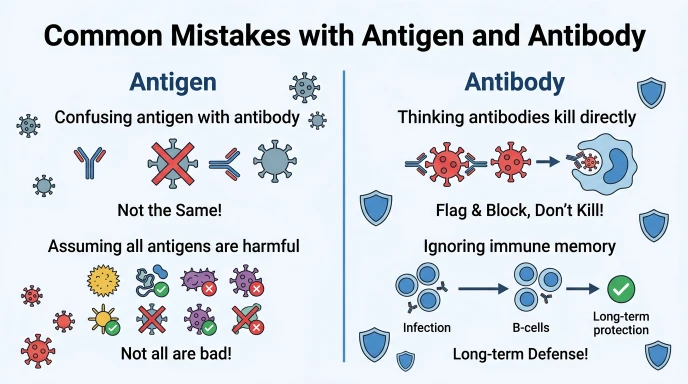
Mistake 1: Thinking They Are the Same Thing
Correction: Antigens trigger immunity; antibodies respond to it.
Mistake 2: Assuming Antibodies Cause Disease
Correction: Antibodies help protect against disease.
Mistake 3: Believing Antigens Are Always Harmful
Correction: Some vaccine antigens are harmless training tools.
Mistake 4: Confusing Antigen Tests with Antibody Tests
Correction: They measure different things.
Mistake 5: Assuming Antibodies Mean Permanent Immunity
Correction: Antibody levels can decrease over time.
Mistake 6: Thinking One Antibody Works Against Every Disease
Correction: Antibodies are highly specific.
Real-Life Examples with Antigen and Antibody
Personal Health Example
A person catches influenza. Viral antigens trigger antibody production.
Vaccination Example
A vaccine introduces antigens, leading to antibody development without causing full disease.
Hospital Laboratory Example
Doctors use antigen testing to identify active infections quickly.
Pharmaceutical Industry Example
Biotechnology companies develop therapeutic antibodies to treat diseases.
Research Example
Scientists study antigen-antibody interactions to design better vaccines and diagnostics.
When to Use Each
Antigen Is Relevant When:
- Diagnosing active infections
- Studying pathogens
- Developing vaccines
- Understanding disease triggers
Antibody Is Relevant When:
- Measuring immunity
- Evaluating vaccine response
- Treating some diseases
- Identifying past exposure
Why People Get Confused About Antigen and Antibody
Several reasons explain the confusion.
Similar Terminology
Both terms begin with “anti,” which can be misleading.
Medical Reporting
Lab reports often mention both together.
Media Coverage
Health news frequently discusses antigen tests and antibody tests without explaining the difference.
Complex Biology Education
Many textbooks introduce both concepts simultaneously.
How Search Engines Understand “Difference Between Antigen and Antibody” and User Intent
Search engines such as Google interpret this query as a combination of:
- Informational intent
- Educational intent
- Medical comparison intent
Users usually want answers to:
- What is an antigen?
- What is an antibody?
- How do vaccines work?
- Which test should I take?
Search algorithms prioritize content that clearly explains the relationship between antigens, antibodies, immunity, vaccines, and diagnostic testing.
Medical education channels on platforms like YouTube often use visual demonstrations because the antigen-antibody relationship is easier to understand when shown step by step.
Expert Insight
One of the most overlooked facts in immunology is that antigens and antibodies are not opponents they are partners in an immune recognition system.
In practical use, healthcare professionals focus on both because they provide different information. Antigens reveal what is happening now, while antibodies often reveal what happened before. Understanding this distinction helps explain everything from vaccine development to disease surveillance and modern diagnostic testing.
FAQs
What is the main difference between antigen and antibody?
An antigen triggers an immune response, while an antibody is produced to fight that antigen.
Can antibodies exist without antigens?
Antibodies are generally produced after exposure to antigens.
Are vaccines antigens or antibodies?
Most vaccines contain antigens or antigen instructions that stimulate antibody production.
Which appears first, antigen or antibody?
Antigen appears first and triggers antibody production.
Can one antibody recognize multiple antigens?
Most antibodies are highly specific to particular antigens.
What are antigen tests used for?
They help detect active infections.
What are antibody tests used for?
They help identify past exposure or immune response.
Are antibodies always protective?
Many are protective, though effectiveness varies by disease and immune response.
How long do antibodies last?
They may last weeks, months, years, or even decades depending on the infection or vaccine.
Why are antigen-antibody reactions important?
They form the foundation of immunity, vaccination, and many diagnostic tests.
Conclusion
Understanding the difference between antigen and antibody is essential for anyone learning about immunity, infections, vaccines, or medical testing. An antigen is the foreign substance that alerts the immune system to a potential threat, while an antibody is the specialized protein produced to recognize and neutralize that threat.
In simple terms, antigens start the immune response and antibodies help finish the job. This relationship explains how the body fights disease, remembers past infections, and develops protection after vaccination. It also explains why antigen tests are used to detect active infections and why antibody tests help measure previous exposure or immune responses.
If you’re a student, healthcare professional, or simply curious about how the immune system works, knowing the difference between antigen and antibody provides a strong foundation for understanding modern medicine. The key takeaway is straightforward: antigen equals trigger, antibody equals defender. Together, they form one of the most remarkable protective systems in human biology.
Read more about!
Difference Between Plaque and Tartar: Complete Guide
Difference Between Communism and Fascism: Explained Clearly

I am Emily Johnson, a USA-based content writer who creates easy-to-read blogs on language and daily life topics. I explain complex ideas in simple English for students and beginners so they can understand easily.