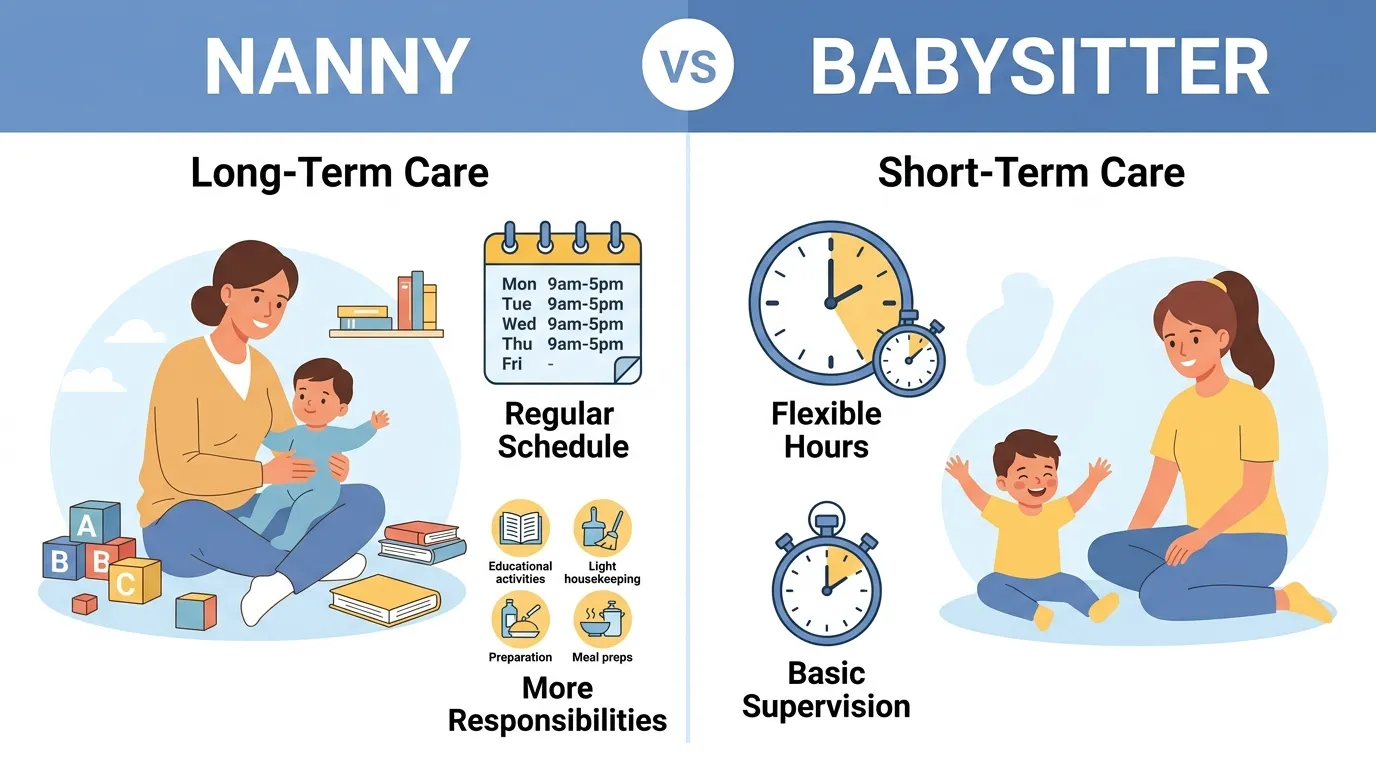
A nanny provides regular, long-term childcare, while a babysitter offers occasional, short-term supervision, so the better choice depends on your family’s childcare needs and schedule.
The difference between nanny and babysitter is one of the most common questions parents ask when looking for childcare. While both care for children, their responsibilities, schedules, experience levels, and long-term involvement can be very different.
Understanding the difference between nanny and babysitter helps parents choose the right caregiver based on their family’s needs, budget, and schedule.
Many users search terms like nanny vs babysitter, what is a nanny, what is a babysitter, and which childcare option is better because the distinction is not always obvious.
Let’s understand this clearly. In simple words, a nanny is usually a regular professional caregiver who provides ongoing childcare, while a babysitter typically offers temporary or occasional child supervision.
Difference Between Nanny and Babysitter
A nanny is a long-term childcare professional who regularly cares for children and may assist with daily routines, education, and development.
A babysitter usually provides short-term or occasional childcare, often for a few hours while parents are away.
Example: If a family needs childcare every weekday, they typically hire a nanny. If they need someone to watch the children during a dinner date, they usually hire a babysitter.
Definition of Nanny and Babysitter
- Nanny: A childcare professional who provides ongoing care for children, often on a full-time or part-time schedule.
- Babysitter: A person hired to supervise children temporarily, usually for a few hours or occasional events.
Simple Example:
A nanny may care for a child five days a week, while a babysitter may only watch the child on Saturday evening.
Pronunciation
| Term | US Pronunciation | UK Pronunciation |
| Nanny | NAN-ee (/ˈnæn.i/) | NAN-ee (/ˈnæn.i/) |
| Babysitter | BAY-bee-sit-er (/ˈbeɪ.biˌsɪ.tɚ/) | BAY-bee-sit-uh (/ˈbeɪ.biˌsɪ.tə/) |
Now that we know the basic definitions, let’s explore the key differences that matter most to parents and caregivers.
Comparison: Nanny vs Babysitter
| Feature | Nanny | Babysitter |
| Employment Type | Regular and ongoing | Temporary and occasional |
| Schedule | Fixed routine | Flexible hours |
| Childcare Role | Comprehensive care | Basic supervision |
| Relationship | Long-term bond | Short-term interaction |
| Experience Level | Often professional | Varies widely |
| Duties | Childcare plus related tasks | Watching children safely |
| Cost | Usually higher | Usually lower |
| Development Support | Often involved | Limited involvement |
| Household Support | May help with child-related chores | Usually not expected |
| Availability | Regular | As needed |
Key Differences Explained Between Nanny and Babysitter
1. Long-Term vs Short-Term Care
The biggest difference between nanny and babysitter is commitment.
A nanny becomes part of a child’s routine for months or years.
A babysitter is typically hired for a few hours.
Example: A nanny may care for a toddler every weekday, while a babysitter watches the child during a wedding reception.
2. Daily Responsibilities
Nannies often handle broader childcare duties.
These may include:
- Meal preparation
- Educational activities
- School pickups
- Nap schedules
- Child development support
Babysitters mainly supervise and ensure safety.
3. Relationship With Children
Children usually develop stronger relationships with nannies because of regular interaction.
A babysitter may know the child well, but the relationship is generally less involved.
4. Professional Training
Many professional nannies have:
- Childcare certifications
- First-aid training
- CPR certification
- Early childhood education experience
Babysitters may have training, but it is not always required.
5. Cost Differences
A nanny typically costs more because they provide consistent and comprehensive care.
Babysitters are often more affordable for occasional childcare needs.
6. Work Schedule
Nannies commonly work:
- Full-time
- Part-time
- Live-in arrangements
Babysitters usually work:
- Evenings
- Weekends
- Special occasions
7. Family Integration
In practical use, nannies often become trusted members of the household.
Babysitters generally provide a service when needed and then leave after their shift ends.
What Is the Difference Between Nanny and Babysitter for Working Parents?
For working parents, childcare reliability is often the deciding factor.
Why Choose a Nanny?
A nanny is ideal when:
- Parents work full-time
- Children need daily care
- Consistency is important
- Long-term support is required
Why Choose a Babysitter?
A babysitter is ideal when:
- Childcare is needed occasionally
- Parents attend social events
- Emergency childcare is required
- Budget is limited
Mini Summary
Daily childcare = nanny.
Occasional childcare = babysitter.
How Does a Nanny Support Child Development?
One unique advantage of hiring a nanny is developmental support.
A professional nanny may help children with:
- Reading
- Language skills
- Homework
- Social development
- Daily routines
In real scenarios, children often benefit from consistent caregiving because routines create stability and confidence.
This is one reason many families prefer a nanny for younger children.
Why Does the Nanny and Babysitter System Exist?
Families have different childcare needs.
Not every parent requires full-time help.
Some need:
- Daily childcare
- Educational support
- Transportation assistance
Others simply need someone to watch children for a few hours.
The childcare industry developed both roles to provide flexibility for different lifestyles and budgets.
Difference Between Nanny and Babysitter in Modern Childcare
Childcare has evolved significantly by 2026.
Today, parents often find caregivers through:
- Social recommendations
- Local agencies
- Online platforms
- Parent communities
Platforms promoted on Instagram, parenting groups on Facebook (Meta), and educational content on YouTube frequently discuss childcare options and caregiver qualifications.
These platforms help families compare nanny and babysitter services more easily than ever before.
How Do Families Decide Between a Nanny and Babysitter?
Several factors influence the decision:
Budget
Babysitters generally cost less.
Schedule
Regular schedules favor nannies.
Child’s Age
Younger children often benefit from consistent caregivers.
Family Lifestyle
Busy households may need more comprehensive support.
Number of Children
Larger families often find a nanny more practical.
Difference and Similarity Between Nanny and Babysitter
| Feature | Nanny | Babysitter | Similarity |
| Purpose | Ongoing childcare | Temporary childcare | Both care for children |
| Schedule | Regular | Occasional | Both can work flexible hours |
| Relationship | Long-term | Short-term | Both interact with children |
| Experience | Often professional | Varies by individual | Both may have childcare experience |
| Duties | Broad childcare support | Basic supervision | Both ensure safety |
| Cost | Higher | Lower | Both are paid services |
| Family Involvement | Integrated into routines | Limited involvement | Both support parents |
| Child Development | Often active role | Usually limited role | Both can positively influence children |
This table clearly shows the difference and similarity between nanny and babysitter for quick understanding.
Common Mistakes with Nanny and Babysitter
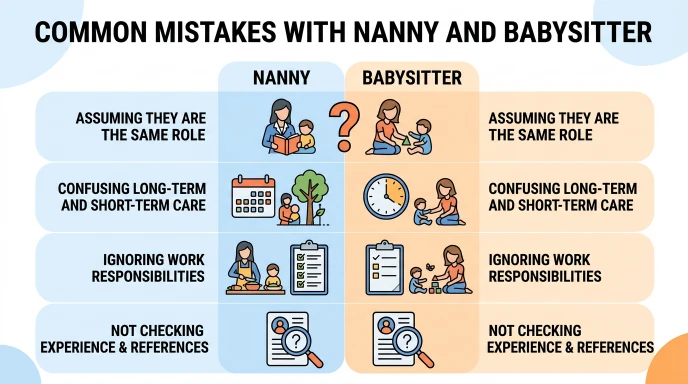
Mistake 1: Thinking They Are the Same Job
While both provide childcare, their responsibilities and schedules are often very different.
Fix
Evaluate the level of care required before hiring.
Mistake 2: Choosing Only Based on Cost
Lower cost does not always mean better value.
Fix
Consider consistency, experience, and childcare needs.
Mistake 3: Ignoring Qualifications
Some parents focus only on availability.
Fix
Check references, certifications, and experience.
Mistake 4: Expecting a Babysitter to Perform Nanny Duties
Babysitters are usually hired for supervision rather than comprehensive childcare management.
Fix
Clearly define expectations before hiring.
Mistake 5: Not Considering Long-Term Needs
Families sometimes hire multiple babysitters when a nanny would provide better consistency.
Fix
Review childcare needs over several months, not just a single week.
Real-Life Examples with Nanny and Babysitter
Personal Use
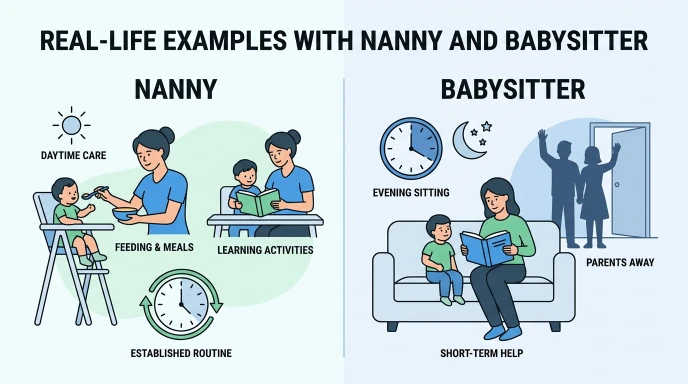
Parents working Monday through Friday hire a nanny to care for their infant daily.
Occasional Childcare
Parents attending a concert hire a babysitter for four hours.
Business Family Example
A family running a business needs reliable weekday childcare and hires a full-time nanny.
Travel Scenario
Parents on vacation hire a temporary babysitter through a hotel childcare service.
Special Needs Support
A trained nanny assists a child with specific developmental requirements and follows a structured care plan.
When to Use Each
Use a Nanny When:
- You need daily childcare
- Children require consistent routines
- You work full-time
- Long-term care is necessary
- Educational support is desired
Use a Babysitter When:
- You need childcare occasionally
- Parents are attending events
- Temporary supervision is enough
- Budget is a major concern
- Backup childcare is needed
Why People Get Confused About Nanny and Babysitter
Many users get confused because both jobs involve caring for children.
Other reasons include:
Overlapping Duties
Both supervise children.
Media Representation
Movies and television often use the terms interchangeably.
Regional Differences
Job descriptions vary between countries.
Online Job Listings
Some listings label babysitting positions as nanny jobs and vice versa.
Informal Usage
Families sometimes use whichever term sounds more familiar.
How Search Engines Understand “Difference Between Nanny and Babysitter” and User Intent
Search engines like Google analyze if users want:
- Definitions
- Hiring advice
- Cost comparisons
- Childcare recommendations
- Professional qualifications
Google evaluates content relevance, expertise, user engagement, and helpfulness signals when ranking childcare-related content.
Similarly, platforms owned and parenting communities often categorize discussions based on family needs, caregiver experience, and childcare goals.
The search intent behind “difference between nanny and babysitter” is usually comparison-focused with a strong decision-making element.
Expert Insight
From a childcare consulting perspective, the best choice depends less on the caregiver title and more on the family’s actual needs.
In real scenarios, parents who need reliability, developmental support, and structured routines often benefit from a nanny. Families needing occasional supervision usually find a babysitter more practical and cost-effective.
The smartest hiring decisions come from matching the caregiver’s responsibilities with the child’s daily needs rather than focusing only on job labels.
FAQs
What is the difference between nanny and babysitter?
A nanny provides ongoing childcare, while a babysitter usually offers temporary or occasional supervision.
Is a nanny better than a babysitter?
Not necessarily. The better option depends on your childcare needs, schedule, and budget.
Do nannies need certifications?
Some do, especially professional nannies with CPR, first-aid, or childcare training.
Are babysitters cheaper than nannies?
Generally, yes. Babysitters often cost less because they work shorter and less frequent shifts.
Can a babysitter become a nanny?
Yes. Many childcare professionals begin as babysitters and later move into nanny positions.
Does a nanny help with homework?
Often yes. Many nannies assist with educational activities and schoolwork.
Do babysitters provide overnight care?
Some do, depending on experience and agreement with the family.
Which is better for infants?
Many families prefer a nanny because infants often benefit from consistent care and routines.
Conclusion
Understanding the difference between nanny and babysitter is essential for choosing the right childcare solution. Although both roles focus on children’s safety and well-being, their responsibilities, schedules, and levels of involvement differ significantly.
A nanny is typically a long-term caregiver who becomes part of a child’s daily routine and may support learning, development, transportation, and household childcare tasks. A babysitter, on the other hand, usually provides short-term supervision for specific occasions, evenings, emergencies, or occasional childcare needs.
In simple words, if your family needs ongoing, structured, and reliable childcare, a nanny is often the better choice. If you only need someone to watch your children occasionally, a babysitter is usually the more practical option.
The key is matching your family’s schedule, budget, and childcare goals with the right caregiver. Once you understand these differences, making the right decision becomes much easier.
Read more about!
Difference Between Highlights and Lowlights: Complete Guide
Difference Between Major and Minor: Complete Guide

I am James Carter, a professional content writer from the United States. I specialize in writing simple and clear comparison blogs that help students and readers understand difficult topics easily. My writing focuses on everyday language, education, science, and lifestyle topics. I believe that learning should be easy for everyone, so I use simple words and real-life examples in my articles.