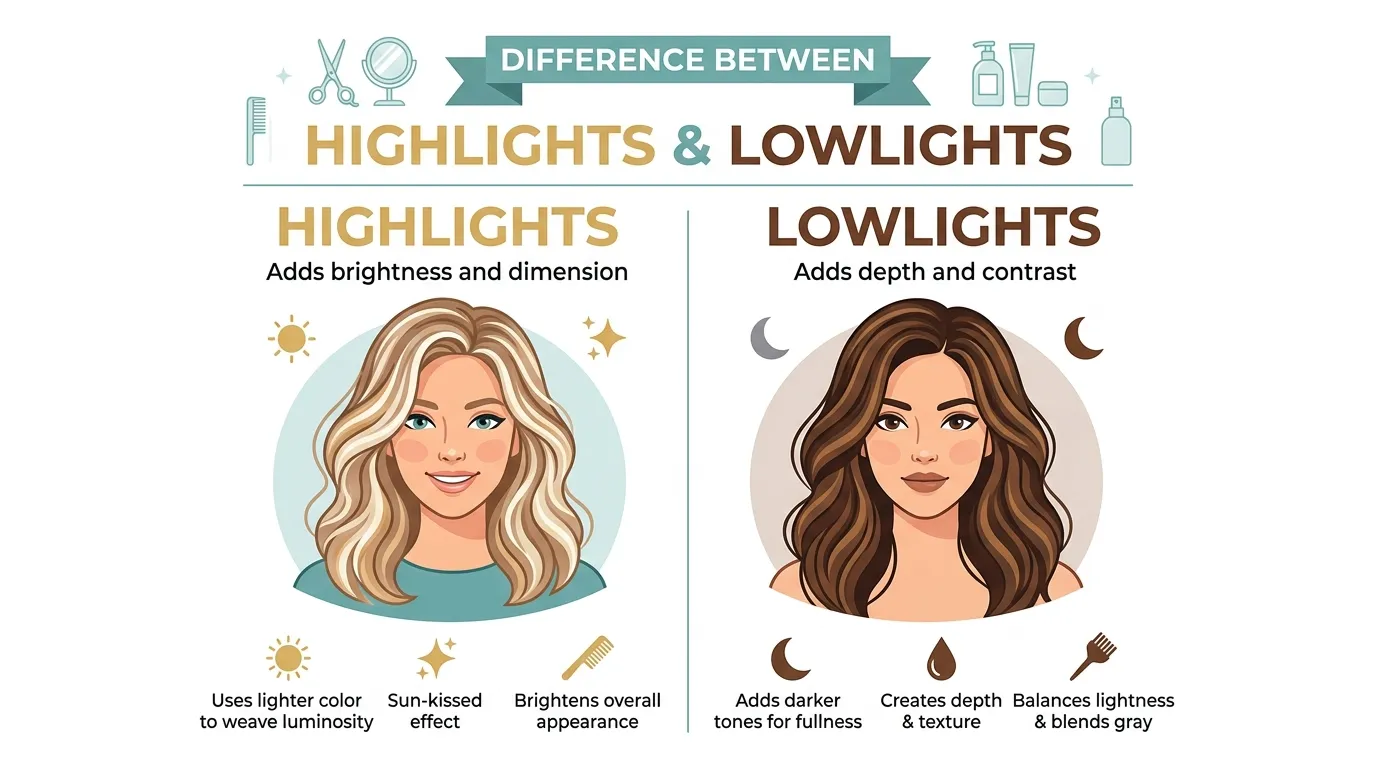
Highlights add lighter tones to hair to create brightness and dimension, while lowlights add darker tones to create depth, contrast, and a richer look.
If you’ve ever sat in a salon chair wondering if to choose highlights or lowlights, you’re not alone. Many people search for the difference between highlights and lowlights because both techniques add dimension to hair, yet they create very different results.
The difference between highlights and lowlights comes down to if sections of hair are lightened or darkened. Highlights make selected strands lighter than your natural color, while lowlights make certain strands darker.
Understanding the difference between highlights and lowlights helps you choose the best hair coloring technique for your style, hair type, and maintenance preferences.
In this guide, you’ll learn what highlights and lowlights are, how they work, when to use each, common mistakes, real-life examples, and professional colorist insights that can help you achieve the look you want.
Difference Between Highlights and Lowlights
Highlights lighten selected strands of hair to create brightness and dimension. Lowlights darken selected strands to add depth, contrast, and richness.
Example: A blonde client may add lowlights to create a more natural look, while a brunette may add highlights for a sun-kissed appearance.
Definition of Highlights and Lowlights
- Highlights: Hair sections colored lighter than the base hair color to create brightness and visual dimension.
- Lowlights: Hair sections colored darker than the base hair color to create depth, contrast, and texture.
Example: Blonde streaks in brown hair are highlights, while darker brown strands added to blonde hair are lowlights.
Pronunciation
| Term | US Pronunciation | UK Pronunciation |
| Highlights | HYE-lights | HYE-lights |
| Lowlights | LOH-lights | LOH-lights |
Now that you know the definitions, let’s explore how these popular salon techniques differ and when each works best.
Difference Between Highlights and Lowlights Comparison
| Feature | Highlights | Lowlights |
| Color Direction | Lighter than base color | Darker than base color |
| Main Purpose | Add brightness | Add depth |
| Visual Effect | Sun-kissed appearance | Richer appearance |
| Hair Appearance | Brighter and lighter | Fuller and dimensional |
| Maintenance | Often requires touch-ups | Generally lower maintenance |
| Popular For | Darker hair wanting brightness | Very light hair needing balance |
| Coloring Process | Bleaching or lifting color | Depositing darker color |
| Overall Look | Radiant and vibrant | Natural and textured |
Key Differences Explained Between Highlights and Lowlights
1. Lightening vs Darkening
The most obvious difference is color direction.
Highlights lighten hair sections.
Lowlights darken hair sections.
Example: A brunette adding caramel strands receives highlights. A blonde adding darker honey tones receives lowlights.
2. Brightness Level
Highlights increase overall brightness.
Lowlights reduce excessive brightness and create contrast.
This distinction often influences salon recommendations.
3. Dimension and Depth
Highlights create visual movement.
Lowlights create depth and fullness.
Professional colorists often combine both for a balanced appearance.
4. Hair Texture Appearance
Highlights can make hair look more dynamic.
Lowlights can make fine hair appear thicker and more dimensional.
5. Maintenance Requirements
Highlights often require more maintenance because root growth becomes noticeable.
Lowlights generally blend more naturally as hair grows.
6. Seasonal Trends
Many people choose highlights during spring and summer.
Lowlights often become more popular during autumn and winter.
7. Color Correction Use
Lowlights are commonly used to fix overly blonde or over-processed hair.
Highlights are often used to brighten dull hair.
What Are Highlights and How Do They Work?
Highlights involve lightening selected strands of hair.
Professional colorists typically use:
- Foils
- Balayage techniques
- Babylights
- Hair painting methods
- Lightening products
The goal is to create brightness while maintaining a natural appearance.
Popular Highlight Styles
- Blonde highlights
- Caramel highlights
- Honey highlights
- Ash blonde highlights
- Face-framing highlights
In practical use, highlights are ideal when you want your hair to appear lighter and more vibrant.
What Are Lowlights and How Do They Work?
Lowlights involve adding darker shades throughout the hair.
Instead of lifting color, the stylist deposits darker pigment.
Popular Lowlight Shades
- Chocolate brown
- Dark blonde
- Auburn
- Mocha brown
- Chestnut
Lowlights help create depth and often make hair color appear more natural.
Difference Between Highlights and Lowlights for Blonde Hair
Blonde hair often benefits from both techniques.
Why Highlights Help Blonde Hair
- Increase brightness
- Add shine
- Create sun-kissed effects
- Enhance facial features
Why Lowlights Help Blonde Hair
- Reduce flatness
- Add dimension
- Create natural contrast
- Correct overly light hair
Many professional colorists use lowlights to prevent blonde hair from looking one-dimensional.
Difference Between Highlights and Lowlights for Brunette Hair
Brunettes frequently choose highlights to create brightness.
Popular choices include:
- Caramel highlights
- Honey highlights
- Golden highlights
Lowlights can also be added to brunette hair when greater depth and richness are desired.
Why Does the Difference Between Highlights and Lowlights Matter?
Choosing the wrong technique may produce unexpected results.
Someone wanting brighter hair may feel disappointed with lowlights.
Someone seeking natural depth may find highlights too dramatic.
Understanding the purpose of each technique helps create realistic expectations before visiting a salon.
Can You Have Highlights and Lowlights Together?
Absolutely.
Many professional hair color transformations use both.
Benefits of Combining Them
- Natural dimension
- Balanced color
- Greater depth
- Improved texture appearance
- Softer grow-out phase
This combination is one of the most requested salon services today.
Difference Between Highlights and Lowlights in Hair Maintenance
Hair maintenance is a major factor when choosing a coloring technique.
Highlights May Require
- Toners
- Purple shampoo
- More frequent touch-ups
- Moisture treatments
Lowlights May Require
- Color-safe products
- Less frequent salon visits
- Occasional color refreshing
Most beginners focus only on appearance, but maintenance costs matter too.
Difference and Similarity Between Highlights and Lowlights
| Feature | Highlights | Lowlights | Similarity |
| Hair Coloring Technique | Yes | Yes | Both modify hair color |
| Salon Service | Common | Common | Professional application recommended |
| Dimension Creation | Brightness-focused | Depth-focused | Add visual interest |
| Hair Customization | Yes | Yes | Personalized results |
| Maintenance Needs | Moderate to high | Moderate | Ongoing care required |
| Natural Appearance | Possible | Possible | Can look natural |
| Color Blending | Yes | Yes | Improve color complexity |
| Fashion Trend | Popular | Popular | Widely used worldwide |
This table clearly shows the difference and similarity between highlights and lowlights for quick understanding.
Common Mistakes with Highlights and Lowlights
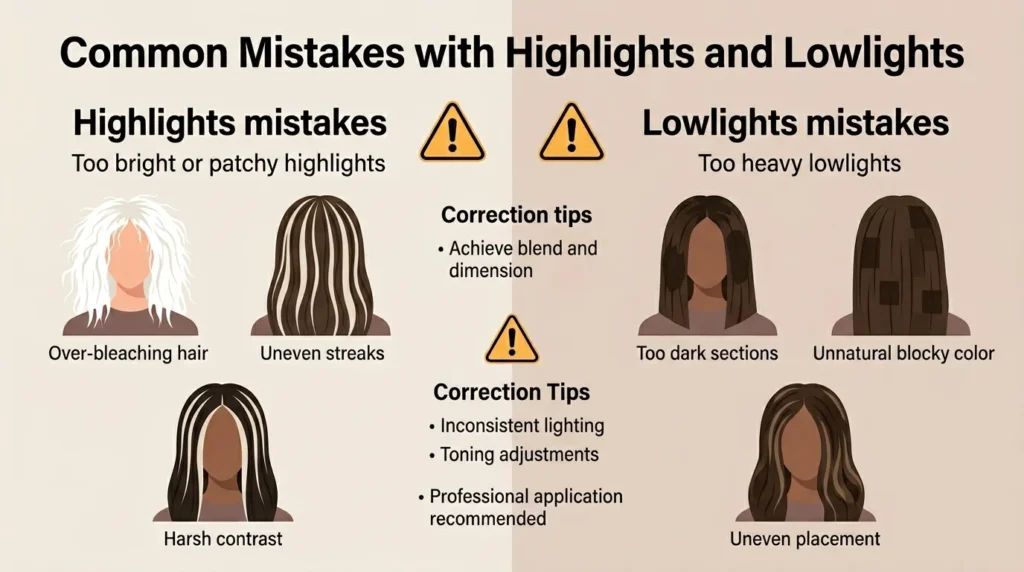
Mistake 1: Thinking Highlights Are Always Better
Correction: The best choice depends on your starting color and desired result.
Mistake 2: Ignoring Skin Tone
Correction: Color selection should complement skin undertones.
Mistake 3: Adding Too Many Highlights
Correction: Excessive brightness can reduce natural dimension.
Mistake 4: Avoiding Lowlights Entirely
Correction: Lowlights often create a richer and more balanced appearance.
Mistake 5: Choosing Trends Over Hair Health
Correction: Healthy hair usually delivers better color results.
Real-Life Examples with Highlights and Lowlights
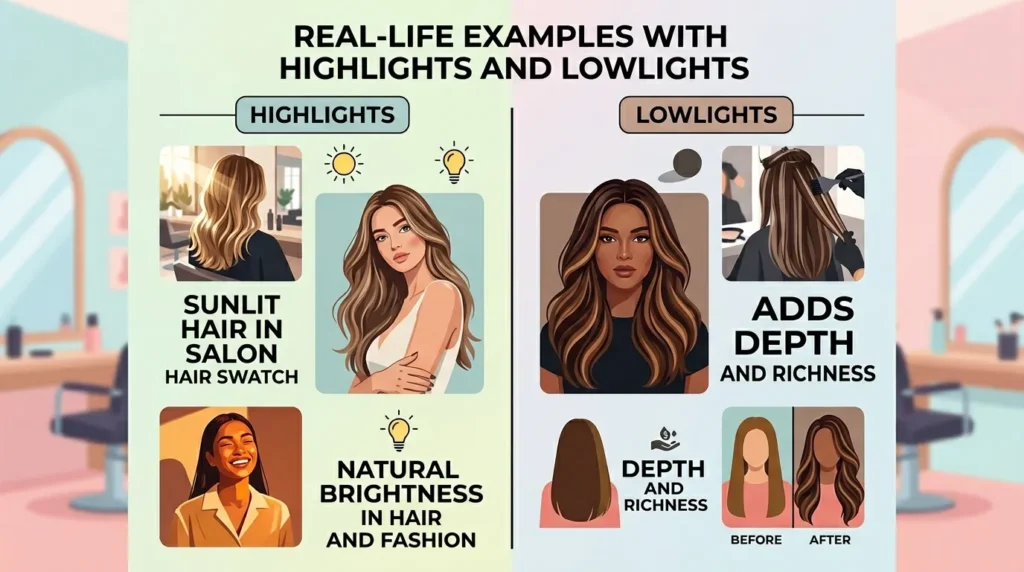
Personal Style Example
A brunette chooses caramel highlights for a brighter summer appearance.
Blonde Refresh Example
A blonde client adds lowlights to restore dimension.
Salon Transformation Example
A stylist combines highlights and lowlights for a natural color blend.
Fashion Industry Example
Professional models often use both techniques for camera-friendly depth.
Beauty Content Example
Hair influencers frequently showcase transformations on social platforms.
When to Use Each
Use Highlights When:
- You want brighter hair
- You desire a sun-kissed look
- You want facial features to stand out
- Your hair feels dull
Use Lowlights When:
- Hair appears too light
- You want added depth
- You seek a natural appearance
- You want richer color contrast
Why People Get Confused Between Highlights and Lowlights
Several reasons contribute to confusion:
- Similar salon terminology
- Both involve coloring selected strands
- Social media often oversimplifies techniques
- Hair transformations may use both methods together
- Many salon photos do not explain the process clearly
Because the names are closely related, beginners often assume they are opposite versions of the same service.
How Search Engines Understand Highlights and Lowlights User Intent
When users search “difference between highlights and lowlights,” search engines such as Google recognize comparison intent and beauty-related educational intent.
Users commonly want answers to:
- What are highlights?
- What are lowlights?
- Which is better for my hair?
- Can I have both?
- Which requires less maintenance?
Beauty creators frequently demonstrate these techniques on YouTube, share before-and-after transformations on Instagram, and showcase salon results across Meta platforms because visual comparisons generate strong engagement.
Search engines prioritize content that explains both techniques clearly and practically.
Expert Insight
One of the biggest misconceptions in hair coloring is that highlights always create the most attractive result.
In real salon scenarios, dimension often matters more than brightness. Professional colorists frequently use lowlights to add depth and realism, especially when hair has become overly blonde or flat-looking.
The most natural-looking hair colors usually combine light and dark tones rather than relying exclusively on one technique.
FAQs
Are highlights and lowlights the same thing?
No. Highlights lighten hair, while lowlights darken hair.
Which lasts longer, highlights or lowlights?
Lowlights often appear more natural as hair grows out.
Can I get highlights and lowlights together?
Yes. Many professional color services combine both.
Are lowlights damaging?
Generally, lowlights involve less lightening and may be less damaging than highlights.
Do highlights require bleach?
Often, yes, depending on the desired result.
Are lowlights good for blonde hair?
Yes. They add depth and reduce a flat appearance.
Which is better for brunettes?
Highlights are commonly chosen, but both can work beautifully.
How often should highlights be touched up?
Typically every 6–12 weeks, depending on growth and style.
Can lowlights make hair look thicker?
Yes. Added depth can create the illusion of fuller hair.
Should I choose highlights or lowlights?
The answer depends on if you want brightness or depth.
Conclusion
Understanding the difference between highlights and lowlights is essential for making informed hair color decisions. While both techniques add dimension and visual interest, they achieve very different effects.
Highlights brighten selected strands to create a lighter, sun-kissed appearance, while lowlights darken selected strands to add depth, richness, and contrast. The right choice depends on your natural hair color, desired look, maintenance preferences, and overall style goals.
In many real-world salon situations, the best results come from combining both techniques. Highlights provide brightness and movement, while lowlights create balance and realism. Together, they can produce a multidimensional hair color that looks natural and sophisticated.
Ultimately, the difference between highlights and lowlights comes down to if you want more light, more depth, or a combination of both. Understanding these distinctions allows you to communicate clearly with your stylist and achieve the hair color results you truly want.
Read more about!
Difference Between Icing and Frosting: Complete Guide
Difference Between Rent and Lease: Complete Guide

I am James Carter, a professional content writer from the United States. I specialize in writing simple and clear comparison blogs that help students and readers understand difficult topics easily. My writing focuses on everyday language, education, science, and lifestyle topics. I believe that learning should be easy for everyone, so I use simple words and real-life examples in my articles.