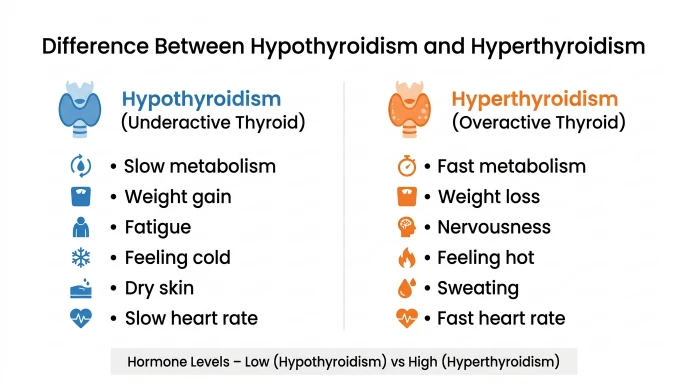
Hypothyroidism means the thyroid is underactive and produces too little hormone, while hyperthyroidism means it is overactive and produces too much hormone.
Many people searching for the difference between hypothyroidism and hyperthyroidism are experiencing symptoms such as fatigue, weight changes, mood shifts, or unusual heart rates.
At first glance, these thyroid disorders may seem similar because both involve the thyroid gland. However, the difference between hypothyroidism and hyperthyroidism is actually quite straightforward: one occurs when the thyroid is underactive, while the other happens when it is overactive.
Understanding the difference between hypothyroidism and hyperthyroidism is important because symptoms, causes, treatments, and long-term health effects can vary significantly.
In this guide, you’ll learn what each condition means, why it happens, how thyroid hormones affect the body, and how doctors diagnose and treat these common endocrine disorders.
Difference Between Hypothyroidism and Hyperthyroidism
The difference between hypothyroidism and hyperthyroidism is that hypothyroidism occurs when the thyroid gland produces too little thyroid hormone, while hyperthyroidism occurs when it produces too much.
Example: A person with hypothyroidism may gain weight and feel tired, while someone with hyperthyroidism may lose weight and feel unusually energetic or anxious.
Definition of Difference Between Hypothyroidism and Hyperthyroidism
- Hypothyroidism: A condition where the thyroid gland does not produce enough thyroid hormones, causing body functions to slow down.
- Hyperthyroidism: A condition where the thyroid gland produces excessive thyroid hormones, causing body functions to speed up.
Example: Low thyroid hormone slows metabolism; high thyroid hormone accelerates metabolism.
Pronunciation
| Term | US Pronunciation | UK Pronunciation |
| Hypothyroidism | hy-po-THY-roi-diz-um | hy-po-THY-roi-diz-um |
| Hyperthyroidism | hy-per-THY-roi-diz-um | hy-per-THY-roi-diz-um |
Now that we understand the definitions, let’s explore how these thyroid disorders affect the body differently.
Difference Between Hypothyroidism and Hyperthyroidism Comparison
| Feature | Hypothyroidism | Hyperthyroidism |
| Thyroid Activity | Underactive | Overactive |
| Hormone Levels | Too low | Too high |
| Metabolism | Slows down | Speeds up |
| Weight Changes | Weight gain | Weight loss |
| Energy Levels | Fatigue | Nervous energy |
| Heart Rate | Slower | Faster |
| Temperature Sensitivity | Cold intolerance | Heat intolerance |
| Mood Effects | Depression, sluggishness | Anxiety, irritability |
| Common Cause | Hashimoto’s disease | Graves’ disease |
| Treatment Goal | Increase hormone levels | Reduce hormone levels |
Key Differences Explained Between Hypothyroidism and Hyperthyroidism
1. Opposite Hormone Production
The most important difference is hormone output.
Hypothyroidism means insufficient hormone production.
Hyperthyroidism means excessive hormone production.
Real-life example: Think of the thyroid as a thermostat. Hypothyroidism turns the body’s settings too low, while hyperthyroidism turns them too high.
2. Metabolism Changes
Thyroid hormones regulate metabolism.
With hypothyroidism, metabolism slows.
With hyperthyroidism, metabolism accelerates.
This explains many symptom differences.
3. Weight Effects
People with hypothyroidism often gain weight despite eating normally.
People with hyperthyroidism may lose weight despite increased appetite.
4. Heart Function
Hypothyroidism can cause a slower heartbeat.
Hyperthyroidism often causes a rapid or irregular heartbeat.
5. Energy Levels
Low thyroid hormone commonly leads to exhaustion.
High thyroid hormone may create restlessness and insomnia.
6. Body Temperature Response
Hypothyroidism often causes sensitivity to cold.
Hyperthyroidism often causes excessive sweating and heat intolerance.
7. Emotional and Mental Health Effects
Both conditions affect mood but in different ways.
Hypothyroidism often causes low mood and brain fog.
Hyperthyroidism frequently contributes to anxiety and nervousness.
What Is the Difference Between Hypothyroidism and Hyperthyroidism in Thyroid Function?
The thyroid gland is a small butterfly-shaped gland located in the neck.
Its primary job is producing hormones:
- T3 (Triiodothyronine)
- T4 (Thyroxine)
These hormones help regulate:
- Energy production
- Body temperature
- Heart function
- Digestion
- Metabolism
The difference between hypothyroidism and hyperthyroidism exists because thyroid hormone levels move in opposite directions.
Why Does Hypothyroidism Slow the Body Down?
When thyroid hormones become too low, the body’s systems receive fewer signals to work efficiently.
Common results include:
- Fatigue
- Weight gain
- Constipation
- Dry skin
- Memory problems
In simple words, the body begins operating in “slow mode.”
Why Does Hyperthyroidism Speed the Body Up?
Excess thyroid hormones overstimulate many organs.
Common symptoms include:
- Rapid heartbeat
- Tremors
- Weight loss
- Excessive sweating
- Anxiety
In practical use, many patients describe feeling like their body is “stuck in overdrive.”
Difference Between Hypothyroidism and Hyperthyroidism Symptoms
Common Hypothyroidism Symptoms
- Fatigue
- Weight gain
- Cold sensitivity
- Depression
- Dry skin
- Hair thinning
Common Hyperthyroidism Symptoms
- Weight loss
- Nervousness
- Fast heartbeat
- Heat sensitivity
- Sweating
- Difficulty sleeping
Many users search symptoms first before realizing the thyroid may be involved.
What Causes Hypothyroidism and Hyperthyroidism?
Common Causes of Hypothyroidism
- Hashimoto’s Thyroiditis
- Thyroid surgery
- Radiation treatment
- Iodine deficiency
- Certain medications
Common Causes of Hyperthyroidism
- Graves’ Disease
- Thyroid nodules
- Excess iodine intake
- Thyroid inflammation
These causes explain why accurate diagnosis is essential.
How Do Doctors Diagnose Hypothyroidism and Hyperthyroidism?
Diagnosis typically involves blood testing.
Important tests include:
- TSH (Thyroid Stimulating Hormone)
- T3
- T4
Hypothyroidism Pattern
- High TSH
- Low T4
Hyperthyroidism Pattern
- Low TSH
- High T4
Additional imaging may be used when necessary.
Difference Between Hypothyroidism and Hyperthyroidism Treatments
Hypothyroidism Treatment
Most patients receive thyroid hormone replacement therapy.
A commonly prescribed medication is Levothyroxine.
Hyperthyroidism Treatment
Possible treatments include:
- Anti-thyroid medications
- Radioactive iodine therapy
- Surgery
Treatment depends on severity and underlying cause.
Can Hypothyroidism and Hyperthyroidism Affect Long-Term Health?
Yes.
Untreated hypothyroidism may contribute to:
- High cholesterol
- Heart disease
- Fertility issues
Untreated hyperthyroidism may contribute to:
- Heart rhythm problems
- Bone loss
- Thyroid storm (medical emergency)
This is why early diagnosis matters.
Why Is Thyroid Health Important in Modern Healthcare?
Thyroid disorders affect millions worldwide.
Healthcare organizations and educational platforms frequently discuss thyroid health.
Searches on Google often increase when people experience unexplained fatigue or weight changes.
Medical educators on YouTube and health creators on Instagram frequently explain thyroid symptoms because early awareness can improve outcomes.
Platforms owned by Meta also host health communities where patients share experiences and support.
Difference and Similarity
| Feature | Hypothyroidism | Hyperthyroidism | Similarity |
| Thyroid Activity | Too slow | Too fast | Both involve thyroid dysfunction |
| Hormone Levels | Low | High | Both affect hormone balance |
| Weight Impact | Gain | Loss | Both affect metabolism |
| Energy Levels | Low energy | Excess energy | Both alter daily functioning |
| Heart Effects | Slow pulse | Fast pulse | Both affect cardiovascular health |
| Temperature Response | Cold intolerance | Heat intolerance | Both influence temperature regulation |
| Causes | Hashimoto’s common | Graves’ common | Both can be autoimmune |
| Diagnosis | Blood tests | Blood tests | Same diagnostic approach |
This table clearly shows the difference and similarity between hypothyroidism and hyperthyroidism for quick understanding.
Common Mistakes with Hypothyroidism and Hyperthyroidism
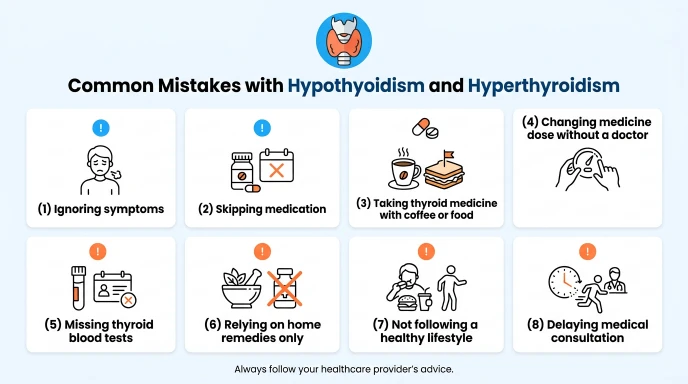
Mistake 1: Assuming They’re the Same Condition
Correction: One involves low hormone levels, the other high hormone levels.
Mistake 2: Self-Diagnosing Based on Weight Changes
Correction: Many conditions affect weight; testing is necessary.
Mistake 3: Ignoring Mild Symptoms
Correction: Early symptoms can gradually worsen.
Mistake 4: Stopping Medication Without Medical Advice
Correction: Thyroid treatment often requires long-term management.
Mistake 5: Assuming Only Women Are Affected
Correction: Men and children can develop thyroid disorders too.
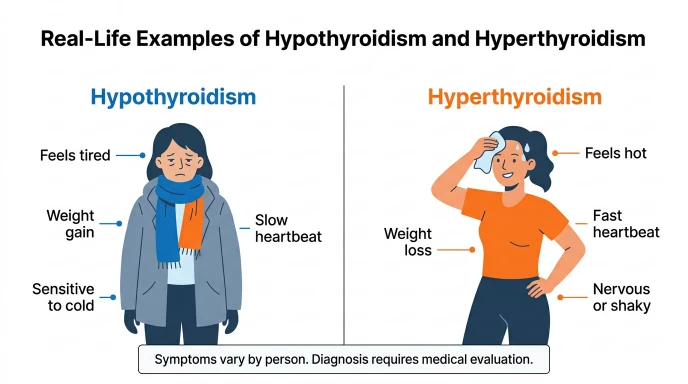
Real-Life Examples with Hypothyroidism and Hyperthyroidism
Personal Scenario
A person feels tired for months, gains weight, and discovers hypothyroidism after blood testing.
Workplace Scenario
An employee experiences anxiety, rapid heartbeat, and weight loss, eventually receiving a hyperthyroidism diagnosis.
Healthcare Industry Example
Doctors routinely screen thyroid function when patients report unexplained symptoms.
Women’s Health Example
Thyroid testing is often recommended during pregnancy planning and fertility evaluations.
Preventive Care Example
Annual health checkups sometimes identify thyroid problems before symptoms become severe.
When to Use Each Understanding
Think About Hypothyroidism When:
- Fatigue is persistent
- Weight gain occurs unexpectedly
- Cold sensitivity increases
- Skin becomes dry
Think About Hyperthyroidism When:
- Heart rate remains elevated
- Weight drops unexpectedly
- Anxiety becomes intense
- Heat intolerance develops
Only medical testing can confirm a diagnosis.
Why People Get Confused in Difference Between Hypothyroidism and Hyperthyroidism
Several factors contribute to confusion:
- Similar names
- Both involve the thyroid gland
- Some symptoms overlap
- Medical terminology can be intimidating
- Media discussions often group thyroid disorders together
The prefixes provide a clue:
- “Hypo” = low
- “Hyper” = high
How Search Engines Understand Difference Between Hypothyroidism and Hyperthyroidism and User Intent
When users search “difference between hypothyroidism and hyperthyroidism,” Google recognizes comparison and health-information intent.
Users usually want:
- Symptom comparisons
- Treatment information
- Diagnostic guidance
- Cause explanations
- Real-world examples
Search engines prioritize medically accurate, trustworthy content because health topics fall under high-trust informational categories.
Expert Insight
As a health-content researcher following endocrine medicine literature, one recurring observation stands out: patients often focus on individual symptoms, while clinicians focus on hormone patterns.
The true difference between hypothyroidism and hyperthyroidism is not merely weight gain versus weight loss. It is if the body’s metabolic engine is running too slowly or too quickly.
Understanding this core principle makes nearly every symptom easier to understand.
FAQs
Is hypothyroidism worse than hyperthyroidism?
Neither is inherently worse. Both require proper diagnosis and treatment.
Can hypothyroidism become hyperthyroidism?
Some thyroid disorders can shift over time, but this is uncommon.
Which causes weight gain?
Hypothyroidism commonly contributes to weight gain.
Which causes anxiety?
Hyperthyroidism often causes anxiety and nervousness.
Can thyroid problems affect sleep?
Yes. Both conditions can impact sleep quality.
What blood test checks thyroid function?
TSH is the most commonly ordered thyroid screening test.
Is hypothyroidism permanent?
Many cases require lifelong treatment, though some causes are temporary.
Can hyperthyroidism be cured?
Some cases can be effectively treated or resolved.
What is the most common cause of hypothyroidism?
Hashimoto’s thyroiditis is a leading cause.
When should I see a doctor?
Seek medical evaluation if persistent symptoms suggest thyroid dysfunction.
Conclusion
Understanding the difference between hypothyroidism and hyperthyroidism is essential because these conditions affect nearly every system in the body. Hypothyroidism occurs when the thyroid gland produces too little hormone, slowing metabolism and causing symptoms such as fatigue, weight gain, cold intolerance, and low energy. Hyperthyroidism occurs when the thyroid produces too much hormone, speeding up metabolism and leading to symptoms such as weight loss, rapid heartbeat, anxiety, and heat intolerance.
Although both conditions involve the thyroid gland, their causes, symptoms, and treatments differ significantly. The key concept to remember is simple: hypothyroidism slows the body’s processes, while hyperthyroidism accelerates them.
If symptoms suggest a thyroid disorder, proper medical evaluation and blood testing are essential. Early diagnosis and treatment can help prevent complications and improve quality of life. By understanding the difference between hypothyroidism and hyperthyroidism, patients can better recognize symptoms, ask informed questions, and work effectively with healthcare professionals.
Read more about!
Difference Between Advice and Advise: Complete Guide
Difference Between Major and Minor: Complete Guide

I am Emily Johnson, a USA-based content writer who creates easy-to-read blogs on language and daily life topics. I explain complex ideas in simple English for students and beginners so they can understand easily.