Jambalaya is a rice-based dish cooked together with meat and vegetables, while gumbo is a thick stew served over rice and often made with a roux and broth.
Many people searching for the difference between jambalaya and gumbo assume they are the same dish because both come from Louisiana cuisine and often contain rice, seafood, sausage, and bold spices.
However, the difference between jambalaya and gumbo is significant. Jambalaya is primarily a rice-based one-pot meal, while gumbo is a rich stew served over rice.
If you’ve ever wondered what is jambalaya, what is gumbo, or how these famous Southern dishes compare, you’re in the right place.
In this complete guide, you’ll learn the difference between jambalaya and gumbo, their origins, ingredients, cooking methods, flavors, and when to choose each dish. Let’s understand this clearly.
Difference Between Jambalaya and Gumbo
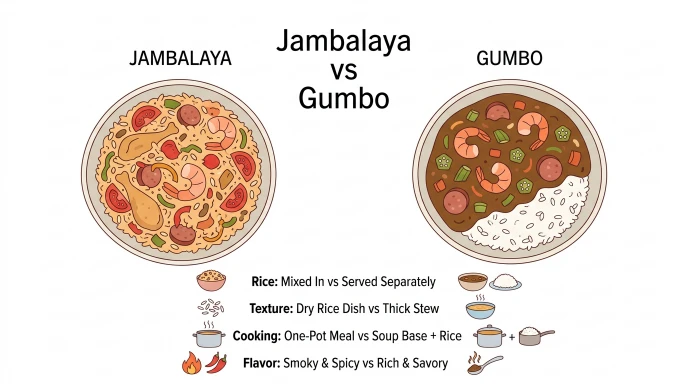
The main difference between jambalaya and gumbo is how rice is used. In jambalaya, rice is cooked directly with the ingredients in one pot. In gumbo, rice is cooked separately and served underneath a flavorful stew.
Example: If you order jambalaya at a Louisiana restaurant, the rice is mixed throughout the dish. If you order gumbo, you’ll usually see a bowl of stew poured over rice.
Definition of Difference Between Jambalaya and Gumbo
- Jambalaya: A Louisiana rice dish cooked with meat, seafood, vegetables, and spices in a single pot.
- Gumbo: A thick Louisiana stew made with meat or seafood, vegetables, stock, and a thickening agent, usually served over rice.
Example: Jambalaya resembles a seasoned rice meal, while gumbo resembles a hearty soup or stew.
Pronunciation
| Term | US Pronunciation | UK Pronunciation |
| Jambalaya | jam-buh-LIE-uh | jam-buh-LIE-uh |
| Gumbo | GUM-boh | GUM-boh |
Now that we know what each dish is, let’s explore their differences in detail.
Difference Between Jambalaya and Gumbo Comparison
| Feature | Jambalaya | Gumbo |
| Dish Type | Rice dish | Stew or soup |
| Rice Usage | Cooked inside dish | Served separately |
| Texture | Dry to moderately moist | Thick and soupy |
| Cooking Method | One-pot meal | Stew prepared separately |
| Main Focus | Rice and protein | Broth and flavor base |
| Thickener | Usually none | Roux, okra, or filé powder |
| Serving Style | Complete meal | Served over rice |
| Flavor Profile | Smoky and hearty | Rich and layered |
| Origin Influence | Spanish-inspired | French and African-inspired |
| Preparation Time | Often quicker | Usually longer |
Key Differences Explained Between Jambalaya and Gumbo
1. Rice Plays Different Roles
The biggest difference between jambalaya and gumbo is rice placement.
In jambalaya, rice absorbs flavors during cooking. In gumbo, rice acts as a base for the stew.
Real-life example: Think of jambalaya as a complete rice dinner and gumbo as a stew served with rice.
2. Texture Is Completely Different
Jambalaya is relatively dry and fluffy.
Gumbo is thick, rich, and spoonable.
This difference is often the easiest way for beginners to identify the dishes.
3. Gumbo Uses a Thickening Agent
Traditional gumbo often contains:
- Roux
- Okra
- Filé powder
Jambalaya rarely requires these ingredients.
4. Cooking Process Differs
Jambalaya cooks everything together.
Gumbo requires building layers of flavor through stock, roux, and simmering.
5. Flavor Development
Gumbo develops depth through slow cooking.
Jambalaya develops flavor through rice absorbing seasoned liquids.
6. Serving Style
Jambalaya arrives as a finished meal.
Gumbo is usually assembled during serving.
7. Cultural Origins
Both dishes reflect Louisiana’s multicultural history but evolved through different culinary influences.
What Is the Difference Between Jambalaya and Gumbo in Louisiana Cuisine?
The difference between jambalaya and gumbo exists because the dishes developed for different purposes.
Jambalaya evolved as an efficient one-pot meal that could feed large groups.
Gumbo evolved as a flavorful stew that maximized available ingredients and cooking techniques.
In practical use, both became staples of Louisiana gatherings, festivals, and family meals.
Why Does Jambalaya Contain Rice While Gumbo Is Served Over Rice?
This question appears frequently in Google searches.
Jambalaya’s roots are often linked to Spanish-style rice dishes similar to paella.
Rice absorbs stock, spices, and proteins during cooking.
Gumbo focuses on creating a flavorful broth and thick texture. Cooking rice separately prevents the stew from becoming overly thick.
This design creates two distinct eating experiences.
How Does Gumbo Get Its Thick Texture?
Traditional gumbo uses one or more thickening methods.
Roux
A mixture of flour and fat cooked until dark brown.
Okra
A vegetable that naturally thickens liquids.
Filé Powder
Ground sassafras leaves used in traditional Louisiana cooking.
The combination creates gumbo’s signature texture and flavor.
Difference Between Jambalaya and Gumbo: Which Is Easier to Cook?
For most home cooks, jambalaya is easier.
Why Jambalaya Is Simpler
- One pot
- Fewer cooking stages
- Less preparation
Why Gumbo Requires More Skill
- Roux preparation
- Longer simmering
- Flavor balancing
Many beginners start with jambalaya before attempting gumbo.
Why Are Jambalaya and Gumbo Important to Louisiana Food Culture?
These dishes represent Louisiana’s diverse heritage.
Influences include:
- French traditions
- Spanish cooking techniques
- African culinary practices
- Native American ingredients
- Caribbean flavors
The result is a unique food culture recognized worldwide.
Today, food creators on platforms like YouTube and Instagram frequently showcase jambalaya and gumbo recipes because of their rich history and visual appeal.
What Ingredients Are Common in Both Dishes?
Although different, they share many ingredients.
Common ingredients include:
- Sausage
- Chicken
- Shrimp
- Crab
- Bell peppers
- Celery
- Onions
- Cajun seasoning
- Creole seasoning
These shared ingredients are one reason many users get confused.
Difference Between Jambalaya and Gumbo Flavor Profiles
Jambalaya Flavor
- Smoky
- Savory
- Rice-forward
- Bold seasoning
Gumbo Flavor
- Deep
- Complex
- Brothy
- Layered
Food enthusiasts often describe gumbo as having more complexity, while jambalaya offers a heartier rice-focused meal.
How Do Restaurants Decide Between Serving Jambalaya and Gumbo?
Restaurants often use both dishes differently.
Jambalaya
Perfect for:
- Buffets
- Catering
- Large events
Gumbo
Perfect for:
- Appetizers
- Signature menu items
- Seasonal comfort food menus
In business settings, jambalaya is often easier to produce in large quantities.
Difference and Similarity
| Feature | Jambalaya | Gumbo | Similarity |
| Meaning | Rice-based meal | Stew-based meal | Both are Louisiana classics |
| Rice Usage | Mixed into dish | Served underneath | Both commonly include rice |
| Texture | Dry or fluffy | Thick and soupy | Both are hearty meals |
| Cooking Style | One-pot cooking | Multi-step stew preparation | Both use slow flavor development |
| Protein Options | Meat and seafood | Meat and seafood | Similar ingredient choices |
| Origin | Spanish influence | French and African influence | Both evolved in Louisiana |
| Serving Method | Complete meal | Stew over rice | Both are filling dishes |
| Flavor Profile | Smoky and bold | Rich and layered | Both feature Cajun and Creole flavors |
This table clearly shows the difference and similarity between jambalaya and gumbo for quick understanding.
Common Mistakes with Jambalaya and Gumbo
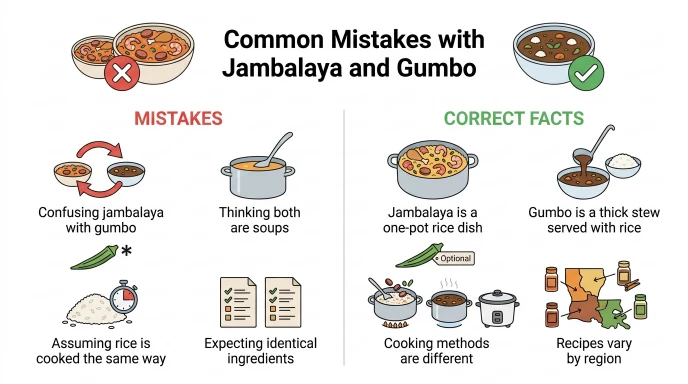
Mistake 1: Calling Gumbo a Rice Dish
Correction: Gumbo is primarily a stew.
Mistake 2: Mixing Rice Into Gumbo During Cooking
Correction: Rice is usually cooked separately.
Mistake 3: Assuming They’re Identical
Correction: Their cooking methods and textures differ significantly.
Mistake 4: Skipping Roux in Traditional Gumbo
Correction: Roux is a key flavor component.
Mistake 5: Expecting Jambalaya to Be Soupy
Correction: Traditional jambalaya is much drier.
Real-Life Examples with Jambalaya and Gumbo
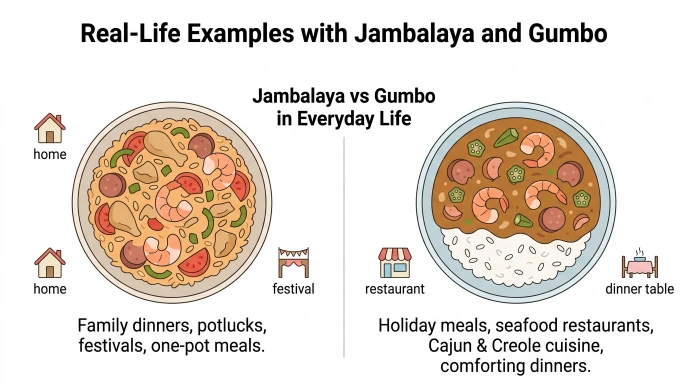
Personal Use
A family prepares jambalaya for a quick weeknight dinner.
Holiday Gathering
A large pot of gumbo is served during a family celebration.
Catering Business
Caterers often choose jambalaya because it scales easily.
Restaurant Industry
Fine-dining restaurants frequently feature gumbo as a signature dish.
Food Festival
Louisiana festivals often showcase both dishes to highlight regional culture.
When to Use Each
Choose Jambalaya When:
- You want a one-pot meal
- Feeding a large crowd
- Looking for simpler preparation
- Seeking a rice-centered dish
Choose Gumbo When:
- You want a rich stew
- Craving layered flavors
- Enjoying traditional Louisiana cuisine
- Looking for comfort food
Why People Get Confused in Difference Between Jambalaya and Gumbo
People often confuse these dishes because:
- Both originate in Louisiana.
- Both contain rice.
- Both use similar proteins.
- Restaurant photos can appear similar.
- Media often groups Cajun and Creole foods together.
In simple words, similar ingredients create confusion, but the cooking methods are very different.
How Search Engines Understand Difference Between Jambalaya and Gumbo and User Intent
When users search “difference between jambalaya and gumbo,” search engines like Google recognize comparison intent.
Google understands users usually want:
- Definitions
- Side-by-side comparisons
- Louisiana food explanations
- Cooking guidance
- Authentic recipe insights
Platforms owned by Meta and recipe creators on Instagram often highlight visual differences, while YouTube demonstrations help users understand preparation methods.
Search engines prioritize content that clearly answers these comparison questions and satisfies user intent.
Expert Insight
As someone who has studied regional American cuisine and food history, one observation stands out: most beginners focus on ingredients, but experienced cooks focus on cooking structure.
The true difference between jambalaya and gumbo is not the sausage, shrimp, or seasoning. It is how those ingredients interact with rice and liquid throughout the cooking process.
In real kitchens, that distinction changes texture, flavor, preparation time, and serving style.
FAQs
Is jambalaya the same as gumbo?
No. Jambalaya is a rice dish, while gumbo is a stew served over rice.
Which is thicker, jambalaya or gumbo?
Gumbo is significantly thicker and more liquid-based.
Does gumbo always contain okra?
No. Some recipes use roux or filé powder instead.
Why is jambalaya cooked in one pot?
The one-pot method allows rice to absorb flavor from all ingredients.
Which dish is more traditional in Louisiana?
Both are traditional Louisiana dishes with long histories.
Is gumbo Cajun or Creole?
It can be either, depending on ingredients and preparation style.
Can seafood be used in both dishes?
Yes. Shrimp, crab, and other seafood are common in both.
Which is easier for beginners?
Most beginners find jambalaya easier to prepare.
Is jambalaya similar to paella?
Yes. Historians often note similarities in rice-based cooking methods.
Which dish is better for large gatherings?
Jambalaya is often preferred because it is easier to scale.
Conclusion
Understanding the difference between jambalaya and gumbo becomes much easier once you focus on how rice is used. Jambalaya is a complete one-pot rice meal where ingredients cook together, creating a hearty and flavorful dish. Gumbo is a rich Louisiana stew built around broth, roux, and layered flavors, then served over separately cooked rice.
While both dishes share roots in Louisiana’s multicultural food heritage and often include similar ingredients such as sausage, chicken, shrimp, and vegetables, their texture, preparation methods, and dining experiences are very different.
If you want a filling rice-centered meal, jambalaya is usually the better choice. If you prefer a deeply flavored stew with complex layers and comforting richness, gumbo may be the winner. Ultimately, the difference between jambalaya and gumbo comes down to cooking technique, texture, and presentation. Understanding these distinctions helps you appreciate two of Louisiana’s most iconic culinary creations.
Read more about!
Difference Between Farther and Further: Complete Guide
Difference Between PA and MD: Complete Guide

I am James Carter, a professional content writer from the United States. I specialize in writing simple and clear comparison blogs that help students and readers understand difficult topics easily. My writing focuses on everyday language, education, science, and lifestyle topics. I believe that learning should be easy for everyone, so I use simple words and real-life examples in my articles.