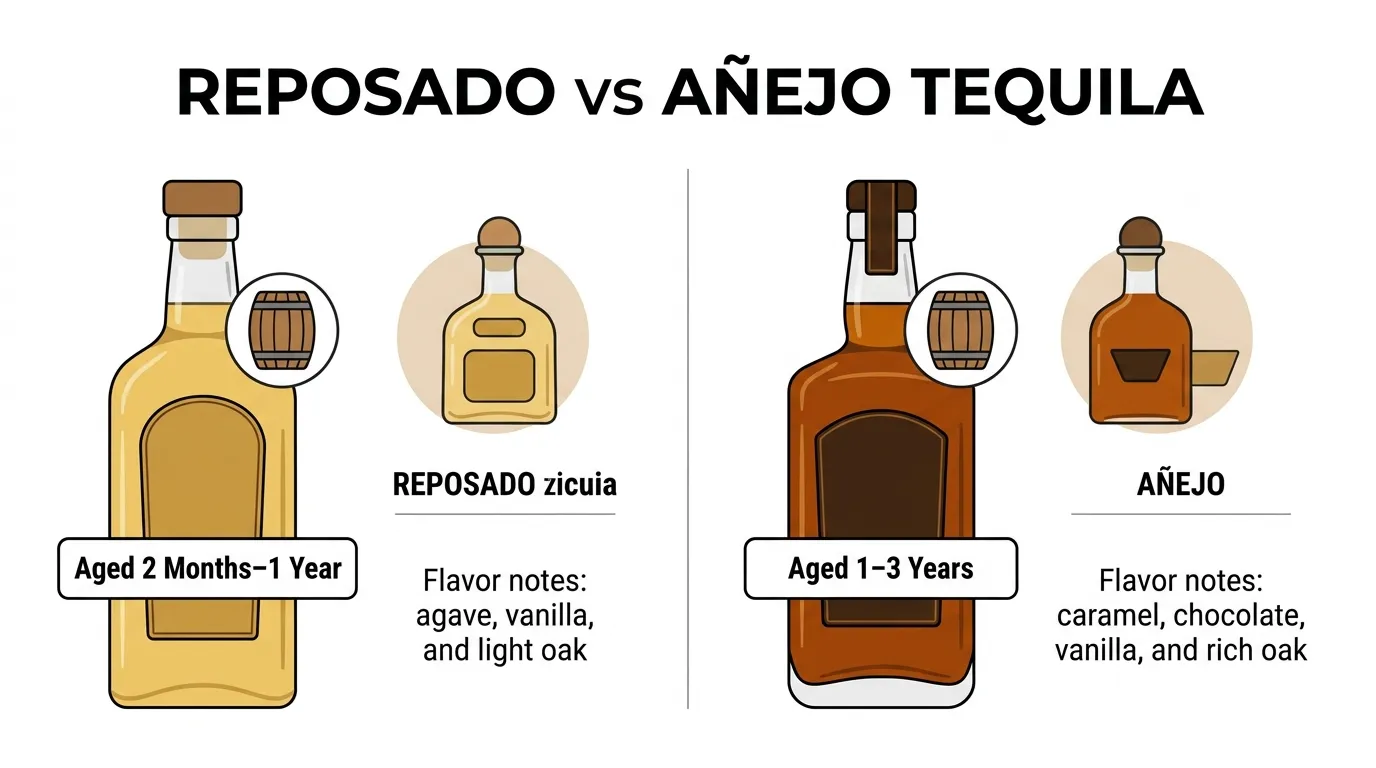
Reposado tequila is aged for 2 months to 1 year, while Añejo tequila is aged for 1 to 3 years, giving Añejo a richer, smoother, and more complex flavor.
If you’ve ever stood in front of a tequila shelf wondering if to choose Reposado or Añejo, you’re not alone.
Many people search for the difference between reposado and anejo because both are aged tequilas, yet they offer very different tasting experiences.
The short answer is simple: Reposado tequila is aged for a shorter time, while Añejo tequila is aged longer, resulting in a richer and more complex flavor. However, there is much more to the story.
In this guide, you’ll learn what Reposado and Añejo mean, how aging affects tequila, which one tastes better in different situations, and how to choose the right bottle.
If you’re a beginner or an experienced tequila enthusiast, this article will help you understand the difference between reposado and anejo clearly.
Difference Between Reposado and Añejo
Reposado tequila is aged in oak barrels for 2 months to less than 1 year, giving it a balanced flavor with both agave freshness and subtle oak notes.
Añejo tequila is aged for 1 to 3 years, creating a smoother, darker, and more complex taste with stronger wood, vanilla, and caramel characteristics.
Example: If you’re making premium cocktails, Reposado is often preferred. If you’re sipping tequila neat, Añejo is usually the better choice.
Definition of Reposado and Añejo
- Reposado: A tequila aged in oak barrels for at least 2 months but less than 1 year.
- Añejo: A tequila aged in oak barrels for at least 1 year but less than 3 years.
Simple Example: Reposado is the “middle-aged” tequila, while Añejo is the more mature and refined version.
Pronunciation
| Term | US Pronunciation | UK Pronunciation |
| Reposado | reh-poh-SAH-doh | reh-poh-SAH-doh |
| Añejo | ahn-YEH-ho | ahn-YEH-ho |
Now that you know how to pronounce them, let’s understand why these aging categories exist and how they affect taste.
Difference Between Reposado and Añejo Comparison
| Feature | Reposado | Añejo |
| Aging Time | 2 months–1 year | 1–3 years |
| Color | Light gold | Deep amber |
| Flavor | Balanced agave and oak | Rich oak and sweetness |
| Smoothness | Moderately smooth | Very smooth |
| Price | Usually lower | Usually higher |
| Cocktail Use | Excellent | Less common |
| Sipping Experience | Good | Exceptional |
| Barrel Influence | Moderate | Strong |
Key Differences Explained Between Reposado and Añejo
1. Aging Duration
The biggest difference between reposado and anejo is aging time.
Reposado rests for a shorter period, while Añejo spends years in oak barrels.
Real-world example: Similar to wine or whiskey, longer aging often creates deeper flavors.
2. Flavor Profile
Reposado maintains more natural agave character.
Añejo develops richer notes such as vanilla, caramel, chocolate, and spice.
3. Color
Reposado usually appears golden.
Añejo often has a darker amber appearance due to extended barrel contact.
4. Smoothness
Many beginners notice that Añejo feels smoother because aging softens harsh edges.
5. Price Point
Longer storage means higher production costs.
As a result, Añejo is generally more expensive.
6. Best Usage
Reposado shines in premium cocktails.
Añejo excels as a sipping tequila.
7. Complexity
Añejo offers more layers of flavor and aroma.
Reposado provides a balance between freshness and oak influence.
What Is Reposado Tequila?
Reposado means “rested” in Spanish.
This category was created to bridge the gap between unaged Blanco tequila and heavily aged Añejo tequila.
During aging, the spirit absorbs subtle flavors from oak barrels while retaining much of its original agave character.
Common Flavor Notes
- Cooked agave
- Honey
- Vanilla
- Light oak
- Citrus
- Pepper
Many tequila experts consider Reposado the most versatile style because it works well both neat and in cocktails.
What Is Añejo Tequila?
Añejo means “aged” or “vintage.”
This tequila remains in oak barrels for significantly longer periods, allowing deeper interaction with wood.
As the tequila matures, it develops characteristics often associated with premium whiskey and cognac.
Common Flavor Notes
- Caramel
- Toffee
- Dark chocolate
- Cinnamon
- Vanilla
- Oak
- Dried fruit
For many enthusiasts, Añejo represents the luxury side of tequila.
Why Does Aging Matter So Much?
Many users get confused because both products start with the same blue agave plant.
The difference comes from barrel aging.
Oak barrels slowly introduce flavor compounds into the tequila while allowing small amounts of oxidation.
This process changes:
- Taste
- Aroma
- Texture
- Color
- Smoothness
In simple words, aging transforms tequila from fresh and vibrant into rich and sophisticated.
Difference Between Reposado and Añejo Taste
Taste is often the deciding factor.
Reposado Taste
- More agave-forward
- Slight sweetness
- Fresh character
- Balanced oak influence
Añejo Taste
- Rich sweetness
- Strong barrel notes
- Greater depth
- Longer finish
Most beginners enjoy Reposado because it remains approachable.
Experienced drinkers often appreciate Añejo’s complexity.
Which Is Better for Cocktails?
Choose Reposado When:
- Making Margaritas
- Creating Palomas
- Mixing premium tequila drinks
- Looking for balance
Choose Añejo When:
- Making luxury cocktails
- Enjoying spirit-forward recipes
- Seeking richer flavors
In practical use, bartenders often prefer Reposado because expensive Añejo flavors can be lost in heavily mixed drinks.
Which Is Better for Sipping?
Añejo generally wins for sipping.
Its smooth texture and layered flavors encourage slow enjoyment.
However, some tequila fans prefer Reposado because they enjoy tasting more of the original agave character.
This is where personal preference matters.
Difference and Similarity Between Reposado and Añejo
| Feature | Reposado | Añejo | Similarity |
| Base Ingredient | Blue agave | Blue agave | Same raw material |
| Production Method | Distilled tequila | Distilled tequila | Same production foundation |
| Aging | Shorter | Longer | Both barrel aged |
| Color | Light gold | Amber | Both darker than Blanco |
| Flavor | Balanced | Rich | Both develop oak notes |
| Usage | Cocktails & sipping | Mostly sipping | Both premium options |
| Region | Mexico | Mexico | Must meet tequila regulations |
| Quality | High | High | Both respected categories |
This table clearly shows the difference and similarity between reposado and anejo for quick understanding.
Common Mistakes with Reposado and Añejo
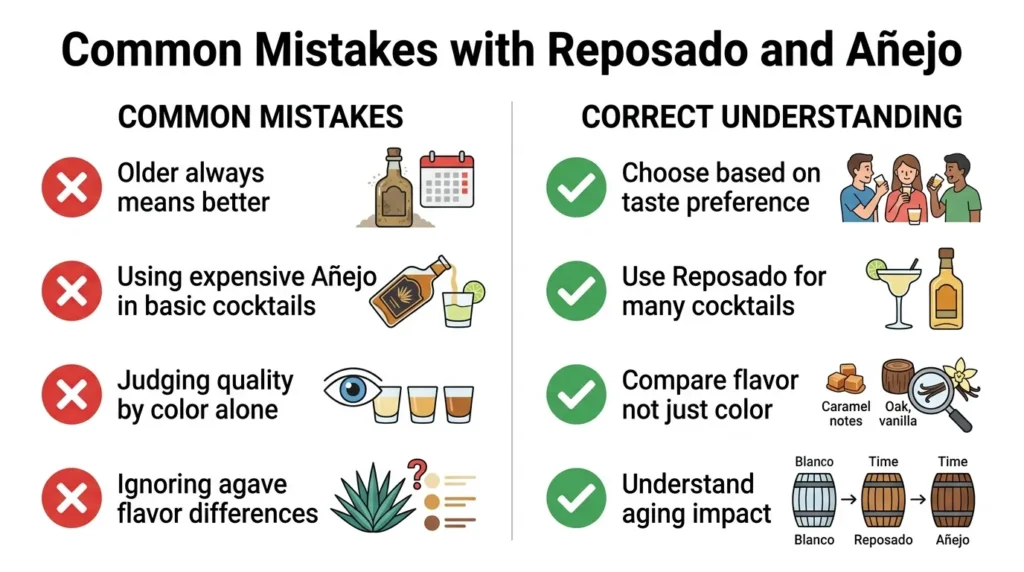
Mistake 1: Assuming Older Always Means Better
Older doesn’t automatically mean better.
Some people prefer the fresher taste of Reposado.
Mistake 2: Mixing Expensive Añejo in Basic Cocktails
Many flavor nuances disappear when heavily mixed.
Mistake 3: Ignoring Agave Character
Long aging can reduce fresh agave notes.
Mistake 4: Judging Only by Color
Darker tequila isn’t always superior.
Mistake 5: Expecting Whiskey Flavors
Although some similarities exist, tequila remains unique.
Real-Life Examples with Reposado and Añejo
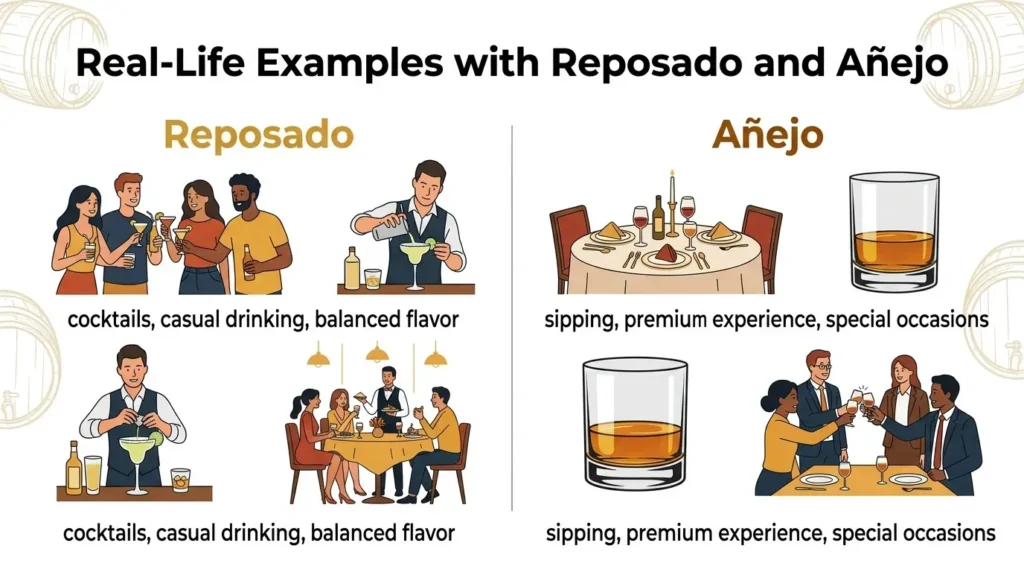
Personal Use
Someone enjoying a casual dinner may choose Reposado.
Luxury Experience
A collector may sip Añejo after a special meal.
Restaurant Industry
Upscale restaurants often offer Añejo as a premium option.
Cocktail Bars
Bartenders frequently use Reposado for signature drinks.
Corporate Events
Premium Añejo is often selected for high-end tastings.
When to Use Each
Use Reposado If:
- You enjoy cocktails.
- You want balanced flavor.
- You prefer moderate pricing.
- You like noticeable agave notes.
Use Añejo If:
- You sip tequila neat.
- You enjoy aged spirits.
- You want premium complexity.
- You appreciate oak-driven flavors.
Why People Get Confused Between Reposado and Añejo
Several reasons contribute to confusion.
- Both are aged tequilas.
- Labels may appear similar.
- Marketing often focuses on premium positioning.
- Social media influencers sometimes oversimplify differences.
- New drinkers may not understand aging categories.
How Search Engines Understand Reposado and Añejo User Intent
When users search “difference between reposado and anejo,” search engines such as Google identify comparison intent.
Users typically want:
- Aging differences
- Taste comparisons
- Buying advice
- Cocktail recommendations
Platforms like Instagram and YouTube also influence consumer behavior because tequila reviews and tasting videos help people compare products visually.
Search engines reward content that answers these practical questions clearly and completely.
Expert Insight
From a beverage industry perspective, neither Reposado nor Añejo is universally better.
The best choice depends on your goal.
In real scenarios, Reposado offers flexibility and value. Añejo offers depth and luxury.
Most beginners start with Reposado because it provides a balanced introduction to aged tequila. Enthusiasts often move toward Añejo as they develop appreciation for barrel-aged complexity.
FAQs
What is the main difference between Reposado and Añejo?
The primary difference is aging time and resulting flavor complexity.
Is Añejo stronger than Reposado?
Not necessarily. Alcohol content is usually similar.
Which is smoother?
Añejo is generally smoother due to longer aging.
Is Reposado better for cocktails?
Yes, many bartenders prefer it.
Why is Añejo more expensive?
Longer aging increases production costs.
Can beginners enjoy Añejo?
Absolutely, especially if they prefer sipping spirits.
Which tastes sweeter?
Añejo often develops sweeter notes from barrel aging.
Is Reposado considered premium?
Yes, many premium tequilas are Reposado.
Conclusion
Understanding the difference between reposado and anejo comes down to one key factor: aging. Reposado tequila spends less time in barrels, preserving more natural agave flavor while adding gentle oak influence. Añejo tequila ages much longer, producing deeper complexity, richer sweetness, and smoother texture.
If you enjoy versatile tequila for cocktails and casual sipping, Reposado is an excellent choice. If you prefer slow sipping and layered flavors similar to premium aged spirits, Añejo may be the better option.
Neither category is objectively superior. The right choice depends on your taste preferences, budget, and drinking style. By understanding aging, flavor profiles, and practical uses, you can confidently choose the tequila that best matches your experience and expectations.
Read more about!
Difference Between Prokaryotic and Eukaryotic Cells: Complete Guide
Difference Between Solute and Solvent: Complete Guide

I am James Carter, a professional content writer from the United States. I specialize in writing simple and clear comparison blogs that help students and readers understand difficult topics easily. My writing focuses on everyday language, education, science, and lifestyle topics. I believe that learning should be easy for everyone, so I use simple words and real-life examples in my articles.